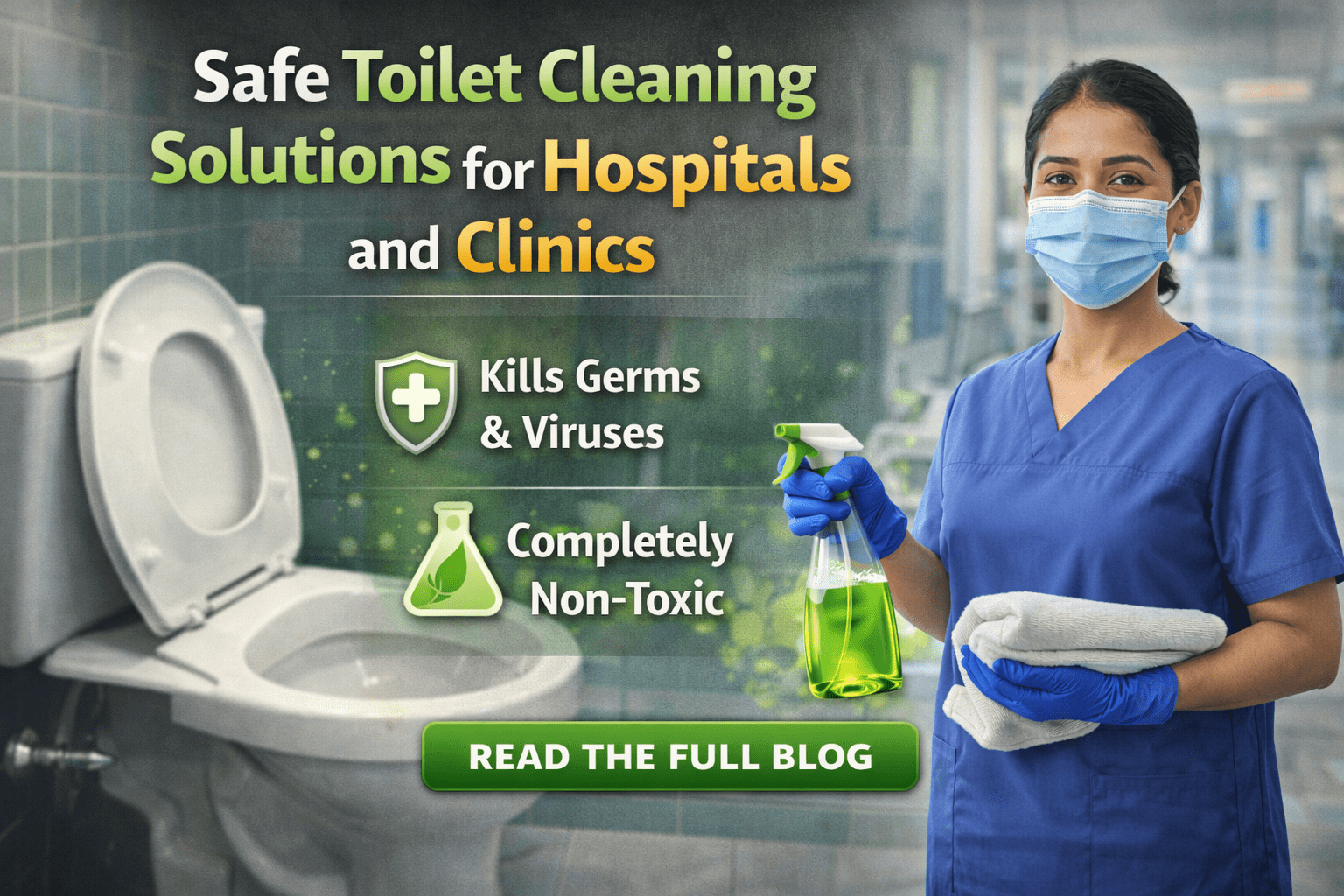
In healthcare environments, the stakes for cleanliness are incredibly high. Hospitals and clinics are places of healing, yet they are also reservoirs for pathogens. The restroom, in particular, is a critical control point for infection prevention. For decades, the standard approach to hospital toilet cleaning has been “nuclear”. using the strongest bleaches, acids, and ammonias available to sterilize surfaces.
While effective at killing germs, this aggressive chemical warfare comes with significant collateral damage. Harsh fumes can trigger respiratory distress in vulnerable patients, corrosive agents destroy plumbing infrastructure, and toxic residues pose risks to cleaning staff. The modern healthcare facility requires a more sophisticated approach. By transitioning to safe, non-toxic, and eco-friendly cleaning solutions, hospitals can maintain rigorous hygiene standards without compromising the health of patients, staff, or the facility itself.
Table of Contents
Streamlining Chemical Management in Healthcare Facilities
The janitorial closet in a typical hospital is often overwhelmed with a vast array of specialized chemicals. There are specific descalers for toilet bowls, disinfectants for seats, glass cleaners for mirrors, and abrasive scrubs for sinks. Managing this inventory is complex and risky. In a high-stress environment, the chance of a staff member grabbing the wrong bottle. or worse, mixing incompatible chemicals like bleach and ammonia. is a constant threat.
Adopting a green cleaning program allows healthcare administrators to consolidate and simplify. Modern bio-enzymatic cleaners and safe, hydrogen peroxide-based disinfectants are often multi-purpose. A single, safe concentrate can replace three or four hazardous products. This simplification streamlines procurement and inventory management. More importantly, it reduces the cognitive load on environmental services (EVS) staff, allowing them to focus on proper cleaning protocols rather than juggling a chemistry set.
Preserving Critical Healthcare Infrastructure
Hospitals operate 24/7, meaning restroom facilities endure relentless use. To combat scale and biological buildup, facilities often rely on strong hydrochloric or phosphoric acid cleaners. While these acids remove mineral deposits quickly, they are highly corrosive. Over time, they eat away at chrome flush valves, pit ceramic glazes, and degrade the grout between tiles. In a hospital setting, damaged grout is more than an aesthetic issue; it becomes a harborage point for bacteria and mold that is impossible to sanitize effectively.
Safe, non-corrosive facility care products offer a smarter alternative. Bio-enzymatic toilet cleaners use beneficial bacteria to digest organic waste and urea, while mild organic salts can handle mineral deposits without damaging surfaces. This approach extends the lifespan of expensive bathroom fixtures and plumbing. By preventing surface damage, hospitals ensure that surfaces remain smooth and easy to disinfect, maintaining the integrity of the sanitary environment.
Protecting Vulnerable Patients with Better Air Quality
Indoor Air Quality (IAQ) is a critical component of patient care. Many hospital patients suffer from respiratory conditions, compromised immune systems, or chemical sensitivities. The fumes from traditional cleaning agents. often laden with Volatile Organic Compounds (VOCs), chlorine, and synthetic fragrances. can be significant irritants. “Clean” should not smell like a chemical factory; in a hospital, it should smell like nothing at all.
Switching to eco-friendly cleaning solutions dramatically improves the indoor environment. Green-certified products are formulated to be low-VOC and fragrance-free. They clean and disinfect without releasing a cloud of toxins into patient wards or waiting areas. This protects the health of patients and reduces the risk of triggering asthma attacks or allergic reactions. Furthermore, it creates a safer working environment for EVS staff, who face the highest exposure levels during their shifts.
The ROI of Safe Cleaning Solutions in Hospitals
Budget constraints are a reality for every healthcare administrator. There is a misconception that safer, green products are a luxury item. However, when the Total Cost of Ownership is considered, safe cleaning solutions often deliver a superior Return on Investment (ROI).
Reduced Staff Injury and Absenteeism
Hospital cleaning staff have some of the highest injury rates in the workforce, often due to chemical burns or respiratory issues. By eliminating caustic and toxic substances, hospitals can significantly reduce workers’ compensation claims and sick leave.
Infrastructure Longevity
Replacing plumbing fixtures or re-grouting tiled areas requires shutting down facilities, which disrupts patient care and results in lost revenue. Non-corrosive cleaners preserve these assets, extending the time between costly renovations.
Efficiency Through Concentration
Most professional safe cleaning systems utilize hyper-concentrated products with automated dilution. This ensures precise dosing, eliminating the waste associated with the “glug-glug” pouring method. The cost-per-use of these systems is frequently lower than ready-to-use hazardous alternatives.
Future-Proofing Hospital Hygiene Standards
The healthcare industry is under increasing pressure to adopt sustainable practices. Regulatory bodies are scrutinizing the environmental impact of medical facilities, from energy use to chemical disposal. Harsh chemical cleaners often contain phosphates and other pollutants that complicate wastewater management and can lead to compliance fines.
Implementing a comprehensive sustainable cleaning strategy aligns hospitals with the future of healthcare. Using biodegradable, non-toxic cleaners ensures compliance with evolving environmental regulations. It also signals a commitment to holistic health. recognizing that the health of the environment is inextricably linked to human health. This proactive stance enhances the hospital’s reputation among patients, staff, and the community.
Conclusion
Safe toilet cleaning in hospitals and clinics is about balancing efficacy with safety. It is possible to achieve hospital-grade disinfection without resorting to toxic chemicals that harm people and property. By embracing bio-enzymatic technology and safe, green chemistry, healthcare facilities can create a truly healing environment. This approach protects the most vulnerable patients, safeguards valuable infrastructure, and supports the financial health of the institution.
About Sanirite
At Sanirite, we redefine hygiene through eco-innovation. We deliver powerful, bio-based cleaning solutions powered by green chemistry to protect people, spaces, and the planet. We are your trusted partner in creating safer, more sustainable environments.
Frequently Asked Questions (FAQ)
Can safe cleaning products effectively kill hospital superbugs like MRSA?
Yes. EPA-registered disinfectants based on safer technologies, such as accelerated hydrogen peroxide or quaternary ammonium compounds (when used correctly), are proven to kill a broad spectrum of pathogens, including MRSA, VRE, and C. difficile spores, without the harsh side effects of bleach.
Do enzyme cleaners replace disinfectants in hospitals?
No, they complement them. Enzyme cleaners are excellent for cleaning. removing the organic soil (bio-burden) that bacteria live in. Once the surface is physically clean, a disinfectant must be applied to kill any remaining pathogens. You cannot disinfect a dirty surface.
Are green cleaning products more expensive for large hospitals?
While the upfront cost per gallon of concentrate might be higher, the in-use cost is often lower due to precise dilution control. Additionally, savings from reduced staff injuries, lower shipping costs, and asset preservation make them financially competitive.
How do safe cleaners help with urine odors in patient bathrooms?
Traditional cleaners often mask odors with fragrance. Bio-enzymatic cleaners digest the uric acid crystals in grout and flooring that cause the smell. By eliminating the source of the odor, they provide a truer clean and a more pleasant environment for patients.
Is special training required for staff to switch to these products?
The transition is generally seamless. Staff need to be trained on new dilution ratios and dwell times (how long the product sits on the surface). However, because the products are safer to handle, staff often prefer them, leading to higher compliance with cleaning protocols.
Tags: hospital toilet cleaning, safe cleaning for clinics, healthcare hygiene solutions, eco-friendly hospital disinfectant, non-toxic restroom maintenance, patient safety cleaning