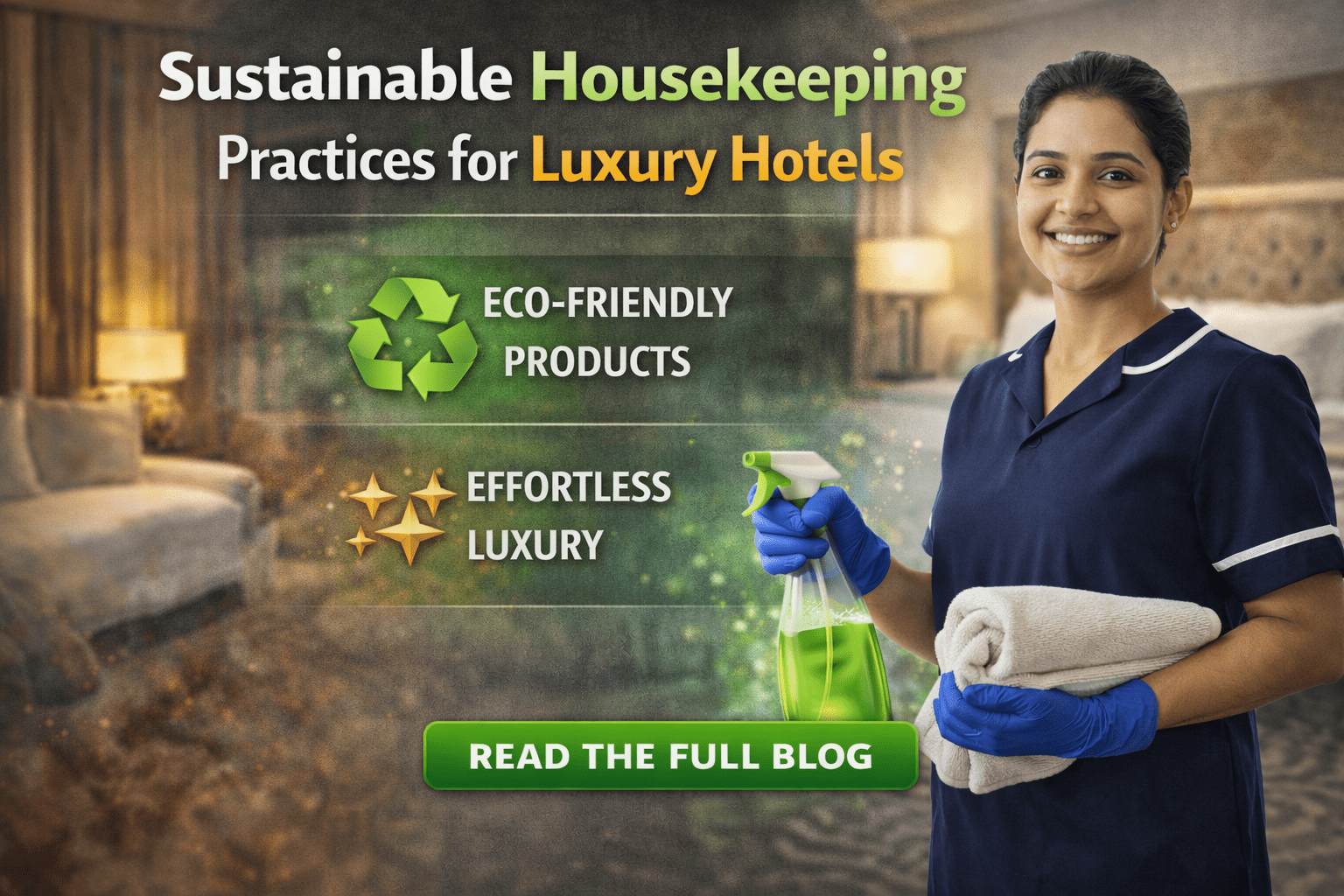
In the world of luxury hospitality, every detail matters. The thread count of the linens, the polish on the chrome, the scent of the lobby. all combine to create an experience of unparalleled comfort and opulence. For decades, achieving this level of perfection in housekeeping relied on a “more is more” approach, often involving a vast array of powerful, and sometimes harsh, cleaning chemicals.
Today, the very definition of luxury is evolving. The modern affluent traveler seeks not just comfort, but wellness and conscientious living. This has given rise to a new imperative: sustainable housekeeping. It’s a holistic approach that balances immaculate presentation with the health of guests, the well-being of staff, and the preservation of the planet. Adopting sustainable practices is no longer a niche trend; it is an essential component of a modern luxury brand, proving that the highest standards of clean can be achieved without compromising on safety or environmental responsibility.
Table of Contents
Streamlining Chemical Management for Elite Hospitality
The housekeeping storeroom of a luxury hotel can resemble a complex laboratory, filled with specialized products for every conceivable surface: marble polish, brass cleaner, leather conditioner, grout whitener, and more. This chemical complexity creates significant operational drag. It complicates procurement, increases storage needs, and demands intensive staff training to prevent costly mistakes, like using an acidic cleaner on a limestone vanity.
Transitioning to a consolidated green cleaning program brings five-star efficiency to this process. A single, high-quality, pH-neutral bio-based cleaner can often replace multiple conventional products, safely cleaning everything from sealed wood to glass and natural stone. This simplification reduces inventory, minimizes the risk of human error, and streamlines training. Housekeeping staff can focus on technique and attention to detail rather than navigating a confusing chemical inventory.
Preserving Priceless Finishes and Decor
Luxury hotels are defined by their exquisite materials: Italian marble floors, custom hardwood furniture, bespoke metal fixtures, and delicate textiles. The greatest threat to these expensive assets is often the very chemicals used to clean them. Harsh, alkaline degreasers can strip the sealant from granite countertops, while acidic bowl cleaners can permanently etch marble if spilled. Over time, these aggressive products cause irreversible damage, dulling the sheen and degrading the quality of the hotel’s finest features.
Sustainable housekeeping prioritizes asset preservation. Eco-friendly facility care products are formulated to be non-corrosive and pH-neutral. They gently lift away dirt and soil without chemically attacking surfaces. Bio-enzymatic cleaners work at a microscopic level to digest organic matter without leaving residue. This gentle but effective approach protects the hotel’s multi-million dollar investment in its interiors, drastically reducing the need for costly restoration and replacement.
The ROI of Sustainability in a Luxury Setting
While luxury hotels operate on a different budget scale, fiscal prudence is still paramount. The investment in a sustainable housekeeping program delivers a compelling Return on Investment (ROI) that goes far beyond simple cost savings on chemicals.
Enhanced Brand Value and ADR
Sustainability is a powerful marketing tool. Hotels that can authentically promote their commitment to guest wellness and environmental care can attract a premium clientele and justify a higher Average Daily Rate (ADR). It becomes part of the luxury story.
Reduced Staff Turnover
Housekeeping staff in luxury hotels are highly trained professionals. Protecting their health by providing safe, non-toxic cleaning products reduces sick leave and demonstrates that the management values its team. This leads to higher morale and lower turnover in a high demand labor market.
Risk Mitigation
Damage to a single, high-value asset such as an antique wooden table or a custom marble floor can cost tens of thousands of dollars to repair. Green cleaners are a form of insurance against these accidental, chemistry based disasters.
Future-Proofing the Luxury Hospitality Brand
The expectations of the luxury consumer are constantly evolving. Tomorrow’s guests will not only expect but demand sustainability as a baseline standard. Global wellness certifications and green building standards are becoming benchmarks for the elite hospitality sector. Hotels that fail to adapt will be seen as outdated and out of touch.
Implementing a comprehensive sustainable cleaning strategy positions a hotel at the forefront of this movement. It is a visible commitment to corporate social responsibility that resonates with guests, investors, and the community. By embedding these practices into daily operations, a luxury hotel future proofs its brand, ensuring it remains relevant and desirable for generations of travelers to come.
Conclusion
Sustainable housekeeping is the new standard for luxury hotels. It is an acknowledgment that true opulence lies not in harsh sterility, but in a state of holistic well-being and environmental respect. By choosing safe, effective, and eco-friendly cleaning solutions, luxury properties can protect their magnificent assets, enhance the guest experience, and strengthen their brand. It is the art of delivering an immaculately clean environment that is as healthy as it is beautiful.
About Sanirite
At Sanirite, we redefine hygiene through eco-innovation. We deliver powerful, bio-based cleaning solutions powered by green chemistry to protect people, spaces, and the planet. We are your trusted partner in creating safer, more sustainable environments.
Frequently Asked Questions (FAQ)
Can sustainable products handle the cleaning demands of a busy luxury hotel?
Absolutely. Modern green cleaning products are engineered for high performance. They undergo rigorous testing to ensure they effectively clean and, where required, disinfect to the highest standards, meeting the demands of a high-traffic luxury environment.
Do green cleaners work on delicate and exotic materials found in luxury hotels?
This is one of their primary advantages. pH-neutral and non-corrosive green cleaners are specifically recommended for delicate surfaces like marble, limestone, unsealed wood, and brass, as they clean without causing chemical damage.
Will our hotel lose its signature "clean scent"?
The trend in luxury is moving away from artificial scents towards a neutral, fresh-air smell. Sustainable cleaners eliminate odor-causing bacteria rather than masking them. For hotels that desire a signature scent, it is better to use high-quality, natural essential oil diffusers separately from the cleaning process.
Is it difficult to train housekeeping staff on a new sustainable system?
The training process is generally simpler. Because sustainable systems often rely on a few multi-purpose products, there is less for staff to learn and a lower risk of error. The focus shifts from chemical management to cleaning technique.
How does sustainable housekeeping affect a hotel's brand perception?
It has a profoundly positive effect. It signals to guests that the hotel is modern, responsible, and genuinely concerned with their well-being. This can build powerful brand loyalty among a discerning and influential clientele.
Tags: sustainable housekeeping, luxury hotels, green cleaning hospitality, eco-friendly hotel supplies, guest wellness, hotel asset protection, sustainable hospitality practices