Facility managers face constant pressure to reduce operational costs while maintaining high hygiene standards. Many, however, overlook a significant budget drain hiding in plain sight: traditional cleaning chemicals. Beyond their sticker price, these conventional cleaners carry hidden costs that quietly erode building maintenance budgets year after year. Understanding these expenses allows for smarter, more sustainable choices.
These hidden costs come from several sources. Complicated chemical management, accelerated wear and tear on building assets, and poor indoor air quality all contribute to a financial burden far greater than the initial purchase price. By understanding these factors, facility directors can make informed decisions that protect both their bottom line and their building.
The True Cost of Chemical Management
Traditional cleaning chemicals require significant investments in infrastructure and administration. Each hazardous product demands proper storage with specific temperature controls, ventilation, and secondary containment systems. Compliance with safety regulations, such as maintaining Safety Data Sheets (SDS) and providing employee training, adds to the administrative load.
This compliance burden translates into real costs. Time is spent managing documentation, conducting recurring training for custodial staff, and maintaining specialized equipment. By contrast, consolidating inventory with multi-surface green chemistry alternatives can simplify these processes. Using fewer, safer products reduces storage needs, streamlines training, and lowers administrative overhead.
How Harsh Chemicals Accelerate Building Wear
Conventional cleaning products often contain strong acids, alkalis, and solvents that don’t just clean surfaces. they gradually damage them. This chemical wear and tear leads to significant long-term costs and requires a more sustainable approach to facility care.
Surface and Flooring Damage
Harsh alkaline cleaners can strip protective finishes from hard floors, leading to more frequent and costly refinishing cycles. Strong acids may etch natural stone surfaces, causing permanent dulling that requires professional restoration or even replacement. Over time, the aggressive solvents in floor strippers can weaken adhesives and degrade floor tile composition. The cumulative effect of this damage forces facility managers into a cycle of premature surface replacement, turning what should be a long-term asset into a recurring expense.
HVAC System Corrosion
A facility’s HVAC system is especially vulnerable to damage from cleaning chemicals. Airborne particles from products containing fluoride and chloride can cause pitting corrosion on coil surfaces. Other chemicals may create formicary corrosion, which results in microscopic, pinhole leaks that are difficult to detect until significant damage has occurred. This corrosion reduces heat transfer efficiency, forcing the system to work harder and consume more energy. Ultimately, corroded coils must be replaced, an expense that can run into thousands of dollars.
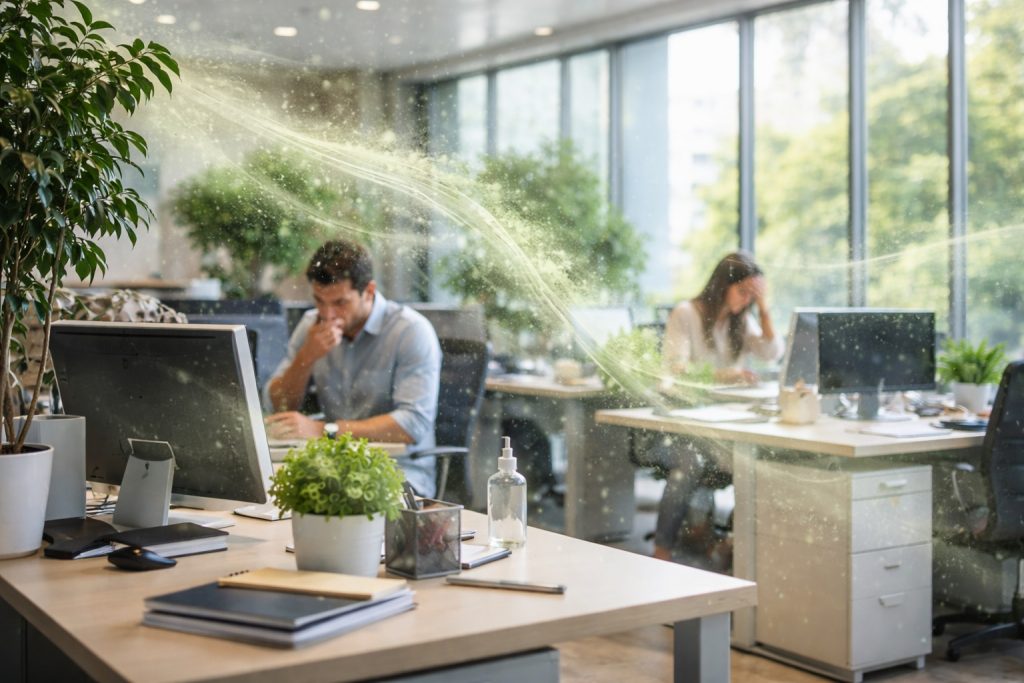
Indoor Air Quality: The Invisible Budget Killer
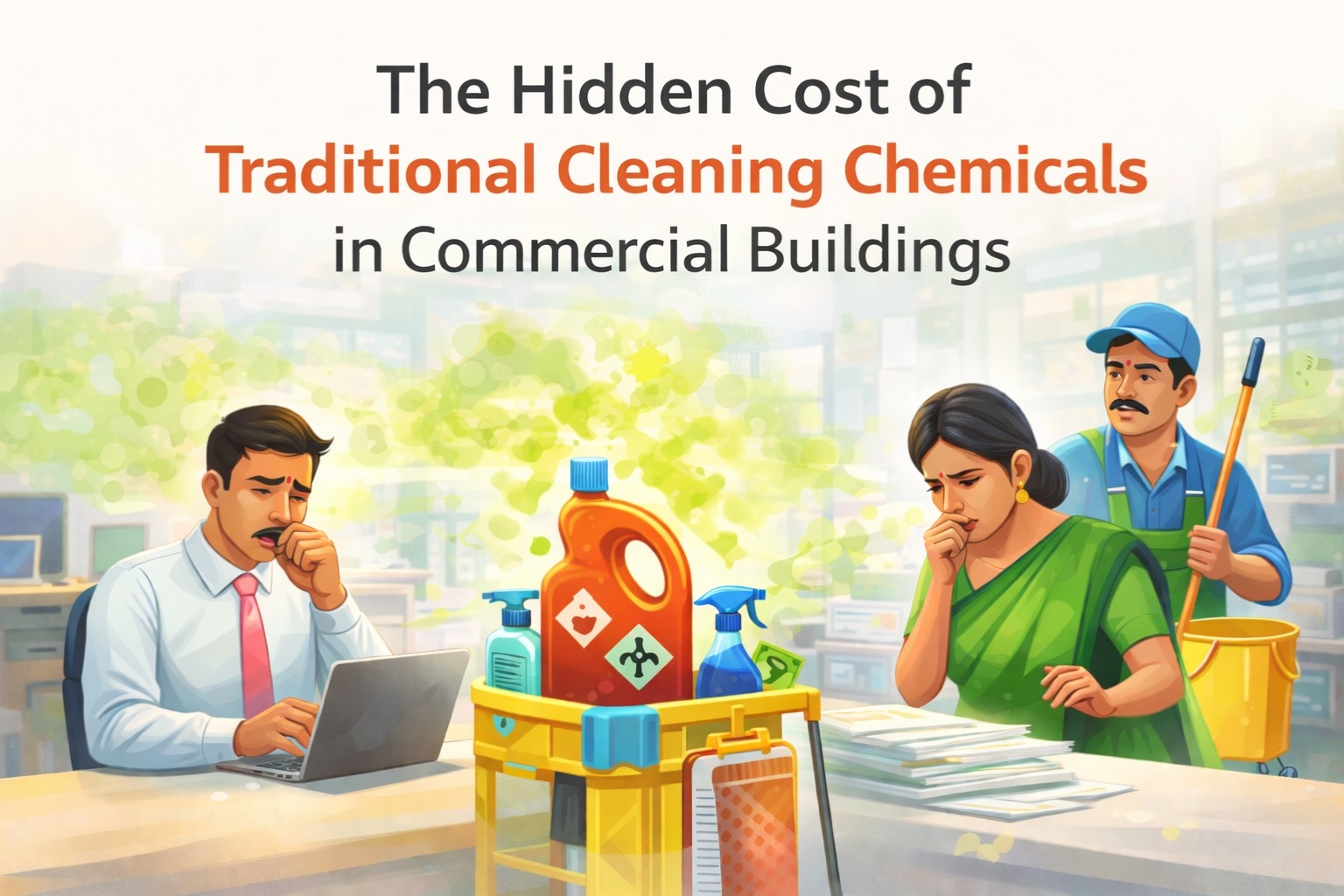
Traditional cleaning products are a primary source of volatile organic compounds (VOCs) that degrade indoor air quality. These VOCs trigger hidden costs that rarely appear on a cleaning budget but have a considerable impact on a facility’s overall operational expenses.
A 2024 study published in Environmental Science: Processes & Impacts found that many cleaning products, including some marketed as “green,” emit high levels of VOCs. These emissions contribute to the formation of secondary pollutants like formaldehyde. Poor indoor air quality is linked to health issues, including work-related asthma, which costs the U.S. economy billions annually in healthcare and lost productivity. Custodial staff face the highest risk, with thousands of chemical exposure injuries reported each year, leading to significant medical and lost-time costs.
The Long-Term ROI of Green Solutions
Forward-thinking facility managers are discovering that sustainable cleaning technologies deliver compelling financial returns. The switch to green and chemical-free solutions is not just an environmental decision but a strategic financial one.
Cost Comparison: Green vs. Conventional
Contrary to a common misconception, certified green cleaning products are often cost-competitive with their traditional counterparts. A survey of institutional cleaning products found that green concentrates were, on average, cheaper per ready-to-use gallon than conventional options. These products also reduce transportation expenses and packaging waste, adding to the savings.
Real-World Savings
Case studies from various institutions highlight the financial benefits. Georgia Tech, for instance, documented an 84% annual cost savings after fully implementing its green cleaning program. These savings came from reduced water usage, fewer product purchases, and the adoption of innovative technologies. Similarly, the Olmsted Medical Center in Minnesota saved over $20,000 annually by reassessing its disinfectant use and adopting greener products.
Technology Integration
Modern cleaning tools amplify the advantages of green chemistry. Microfiber mops, for example, have shown dramatic results. UC Davis Medical Center reported a 60% lifetime cost savings, a 95% reduction in chemical and water use, and a 20% labor savings after switching to microfiber. Though the initial investment is higher, the extended lifespan and reduced resource consumption create a positive ROI within the first year.

Future-Proofing Your Facility
Adopting safer cleaning solutions protects against multiple risks, including evolving regulations, client demands for sustainability, and the rising costs of traditional chemical management. Chemical-free technologies eliminate many compliance headaches, improve staff safety, and reduce workers’ compensation claims.
Building systems also benefit. Gentler, pH-neutral cleaners perform effectively without causing corrosion or surface degradation. HVAC coils maintain efficiency, floor finishes last longer, and natural stone surfaces retain their appearance for decades. The decision to transition away from traditional chemicals is a smart strategy that protects assets, reduces complexity, and delivers cost savings that compound over time.
About Sanirite
At Sanirite, we redefine hygiene through eco-innovation. We deliver powerful, bio-based cleaning solutions powered by green chemistry to protect people, spaces, and the planet. We are your trusted partner in creating safer, more sustainable environments.
Conclusion
Green cleaning solutions are more than just an environmental upgrade. they are a powerful strategy for long-term cost savings, facility health, and asset longevity. By replacing harsh traditional chemicals with pH-neutral, bio-based alternatives, facility managers simplify chemical management, reduce workplace injuries, and maintain the integrity of valuable surfaces and HVAC systems. Improved indoor air quality leads to healthier, more productive occupants, while robust ROI and future-proofing give organizations a competitive edge. Making the switch to sustainable cleaning isn’t just the right choice for the planet. it’s a strategic investment in your building’s success.
Frequently Asked Questions (FAQ)
How much can facilities realistically save by switching to green cleaning?
Savings vary by facility size and current practices, but documented case studies show significant reductions in cleaning-related costs, sometimes as high as 80%. These savings result from reduced product and water usage, as well as lower maintenance and labor costs.
Will green cleaning products perform as well as traditional chemicals?
Yes. Third-party certified green cleaning products must meet rigorous performance standards. When combined with modern tools like microfiber technology, they often achieve superior microbial removal compared to conventional methods. The key is to select properly certified products and follow usage guidelines.
What certifications should I look for in green cleaning products?
Look for credible third-party certifications like Green Seal, Ecologo, or the EPA’s Design for the Environment (DfE) recognition. These labels ensure that products meet verified environmental, health, and performance standards.
How long does it take to see ROI from green cleaning investments?
Facilities typically see a positive return on investment within 6 to 12 months. Immediate savings come from reduced chemical purchases and simplified storage. Long-term benefits include lower equipment maintenance costs and an extended lifespan for building assets.
Can chemical-free solutions handle tough cleaning challenges?
Modern green chemistry has produced powerful solutions for difficult tasks, including grease removal, hard water stain treatment, and sanitization. Many bio-based cleaners use oxygen-powered technology and enzymes to break down organic matter effectively without harsh solvents or acids.
Tags
green cleaning solutions, sustainable cleaning, commercial cleaning costs, building maintenance savings, ROI of green cleaning