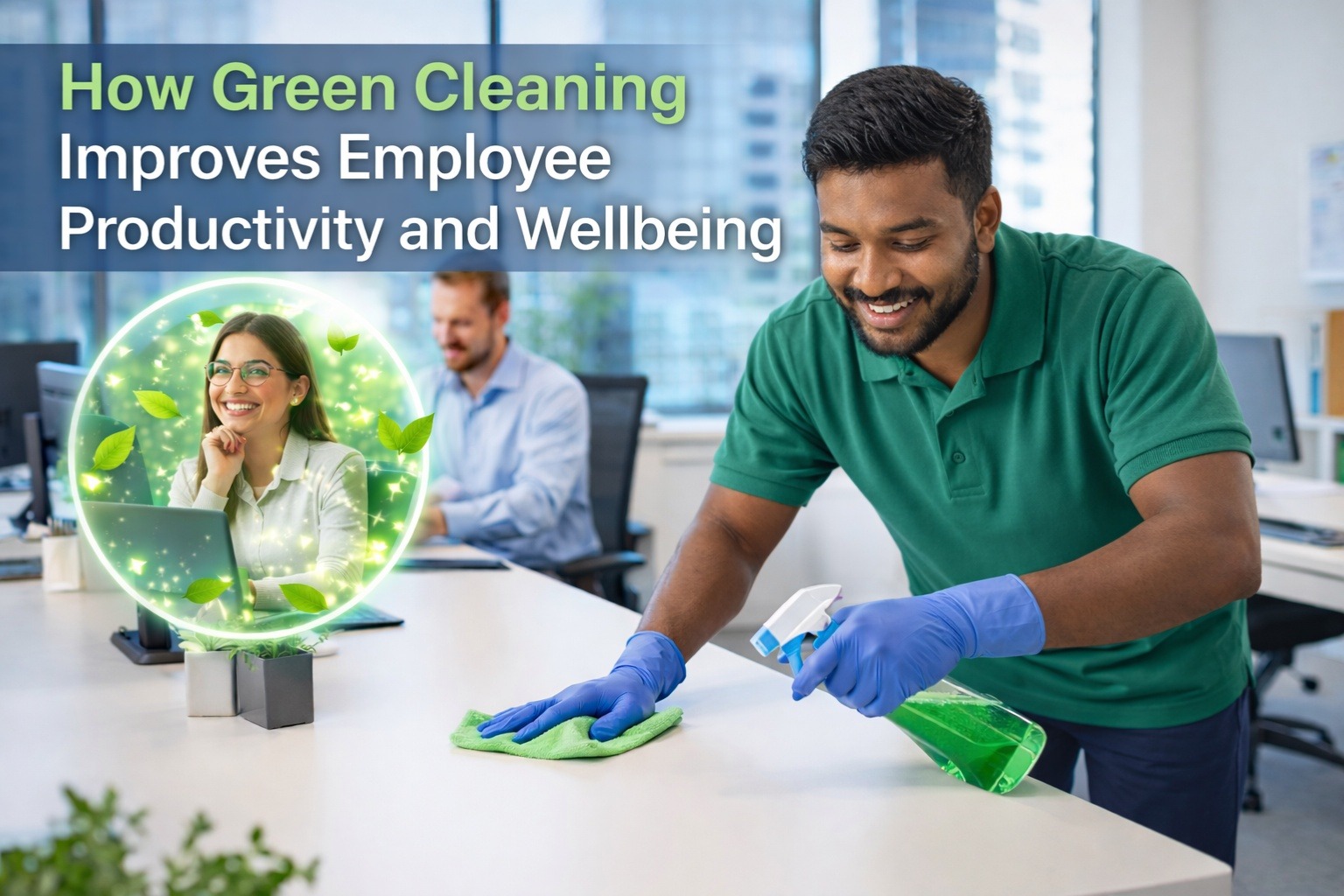
In the modern workplace, productivity is often measured by output, efficiency, and focus. Yet, many business leaders overlook a critical factor that directly influences all three: the indoor environment. The cleaning products used to maintain an office do more than just remove dirt; they significantly impact the air employees breathe and the surfaces they touch. Traditional cleaning chemicals, often laden with harsh toxins and synthetic fragrances, can silently undermine employee health and cognitive performance.
Switching to green cleaning protocols is not just an environmental choice. it is a strategic investment in human capital. By reducing exposure to volatile organic compounds (VOCs) and allergens, companies can create a healthier, more vibrant workspace. This shift leads to fewer sick days, sharper focus, and a more positive company culture. Understanding the connection between eco-friendly cleaning solutions and workforce performance is the key to unlocking a hidden tier of productivity.
Table of Contents
- How Green Cleaning Improves Employee Productivity and Wellbeing
- The Impact of Chemical Management on Workplace Safety
- How Harsh Chemicals Affect Physical Comfort and Focus
- Indoor Air Quality: The Invisible Productivity Killer
- The ROI of Employee Health and Wellbeing
- Future-Proofing Corporate Wellness
- About Sanirite
- FAQ
The Impact of Chemical Management on Workplace Safety
The way cleaning chemicals are managed in a facility has a direct ripple effect on employee peace of mind and safety. Traditional cleaning often involves a complex arsenal of hazardous substances that require strict storage protocols and extensive safety training. When these harsh chemicals are present, there is always a lingering risk of accidental spills, fumes, or improper mixing, which can lead to workplace accidents or emergency evacuations that disrupt workflow.
Streamlining this process with green cleaning products simplifies safety management significantly. Bio-based and non-toxic cleaners eliminate the need for aggressive safety measures and specialized storage for hazardous materials. When employees know their workspace is maintained with safe, non-toxic substances, it fosters a psychological sense of safety. This reduction in “background anxiety” regarding health risks allows staff to focus more fully on their tasks, knowing their immediate environment is not a threat to their well-being.
How Harsh Chemicals Affect Physical Comfort and Focus
We often associate building wear and tear with physical assets, but harsh chemicals also degrade the “human asset.” Conventional cleaners frequently leave behind residues that can be irritating to the skin and eyes. Strong chemical odors from bleach, ammonia, or artificial fragrances can trigger headaches, nausea, and fatigue. These physical discomforts are subtle but persistent distractions that chip away at an employee’s ability to concentrate.
Reducing Sensory Overload
A workplace filled with the sharp, stinging scent of industrial cleaners creates sensory overload. For neurodivergent employees or those sensitive to strong smells, this can make the office environment almost unbearable. Green cleaning solutions are typically odorless or naturally scented, creating a neutral olfactory environment. By removing these sensory irritants, companies can help employees maintain deeper focus and sustain mental energy throughout the day.
protecting the “Skin” of the Building
Just as harsh chemicals erode floor finishes and corrode HVAC coils, they also degrade the overall aesthetic of the office. Dull floors, etched surfaces, and lingering chemical films make a workspace feel worn and neglected. A clean, well-maintained environment utilizing gentle facility care products preserves the professional appearance of the office. Working in a bright, well-cared-for space naturally boosts morale and professional pride, which translates into better work performance.
Indoor Air Quality: The Invisible Productivity Killer
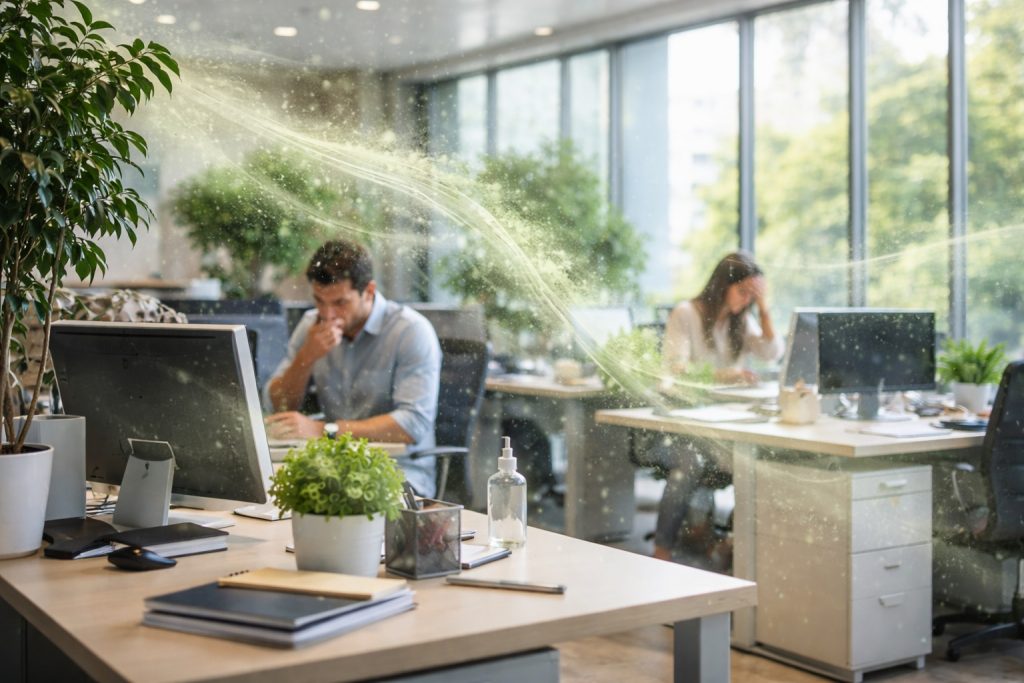
The most profound impact of cleaning products on productivity is through Indoor Air Quality (IAQ). According to the EPA, indoor air can be two to five times more polluted than outdoor air, largely due to cleaning products. Conventional cleaners release high levels of VOCs, which hang in the air long after the janitorial staff has left.
Poor IAQ is directly linked to “Sick Building Syndrome,” characterized by symptoms like throat irritation, headaches, and brain fog. A study by Harvard T.H. Chan School of Public Health found that cognitive function scores were significantly higher in green building environments with enhanced ventilation and low VOCs. Employees in these environments performed 61% better on cognitive tasks than those in standard office environments.
By switching to low-VOC cleaning agents, businesses remove these airborne toxins. The result is clearer air, which supports better oxygenation of the brain, sharper decision-making, and sustained mental stamina. It turns the office air from a liability into an asset for cognitive performance.
The ROI of Employee Health and Wellbeing
Investing in green cleaning offers a tangible Return on Investment (ROI) measured in reduced absenteeism and higher engagement. The cost of sick leave, temporary staffing, and lost productivity due to illness is substantial. Respiratory issues and skin conditions triggered by chemical exposure are preventable causes of absenteeism.
Reduced Absenteeism
When the workplace is free from asthma triggers and respiratory irritants found in traditional cleaners, employees get sick less often. A healthier environment means fewer days off for allergies, headaches, or respiratory infections. This consistency in attendance ensures projects stay on track and teams remain cohesive.
Enhanced Employee Retention
Today’s workforce values sustainability and corporate responsibility. Employees are more likely to stay with a company that demonstrates a genuine commitment to their health and the environment. Implementing a green cleaning program is a visible, daily reminder of that commitment. It builds trust and loyalty, reducing turnover costs and helping to attract top talent who prioritize a healthy work-life environment.

Future-Proofing Corporate Wellness
The definition of corporate wellness is expanding. It is no longer just about gym memberships or healthy snacks; it includes the fundamental safety of the physical workspace. As regulations regarding workplace safety and environmental impact tighten, companies relying on harsh chemicals may face increasing compliance burdens and liability risks.
Adopting a green cleaning strategy future-proofs the organization against these shifts. It aligns the company with global sustainability goals and sets a higher standard for workplace health. By eliminating toxic inputs now, businesses position themselves as leaders in employee care. This proactive approach ensures that the workspace remains a productive sanctuary, resilient against changing health standards and evolving employee expectations.
About Sanirite
At Sanirite, we redefine hygiene through eco-innovation. We deliver powerful, bio-based cleaning solutions powered by green chemistry to protect people, spaces, and the planet. We are your trusted partner in creating safer, more sustainable environments.
Conclusion
Switching to green cleaning is more than just a corporate responsibility. it’s a smart investment in your greatest asset: your people. By eliminating harsh chemicals and improving indoor air quality, businesses experience fewer sick days, higher morale, and sharper focus across their teams. Green cleaning empowers companies to build healthier, happier workplaces that attract and retain top talent, all while safeguarding the environment. Make the shift today and see the dramatic difference in productivity and employee wellbeing.
Frequently Asked Questions (FAQ)
Does green cleaning actually improve productivity?
Yes. Studies show that improved indoor air quality and reduced exposure to chemical irritants lead to better cognitive function, fewer headaches, and reduced fatigue, all of which directly boost employee focus and output.
Will switching to green products reduce sick days?
It is highly likely. By removing common respiratory irritants and allergens found in traditional cleaners, you create a healthier environment that can reduce the frequency of asthma attacks, allergies, and other work-related health issues.
Are scent-free cleaning products better for the office?
Generally, yes. Artificial fragrances in cleaning products are a common source of indoor air pollution and can trigger migraines or allergic reactions in sensitive individuals. Scent-free or naturally scented green products minimize these risks.
Is it expensive to switch to a green cleaning program for employee health?
Generally, yes. Artificial fragrances in cleaning products are a common source of indoor air pollution and can trigger migraines or allergic reactions in sensitive individuals. Scent-free or naturally scented green products minimize these risks.
How do I know if my current cleaning products are affecting my employees?
If employees frequently complain of headaches, eye irritation, or lingering chemical smells, or if you notice a pattern of respiratory-related sick leave, your cleaning products could be a contributing factor.
Tags
green cleaning for productivity, eco-friendly cleaning benefits, employee wellness cleaning, innovative office cleaning, powerful workplace health solutions