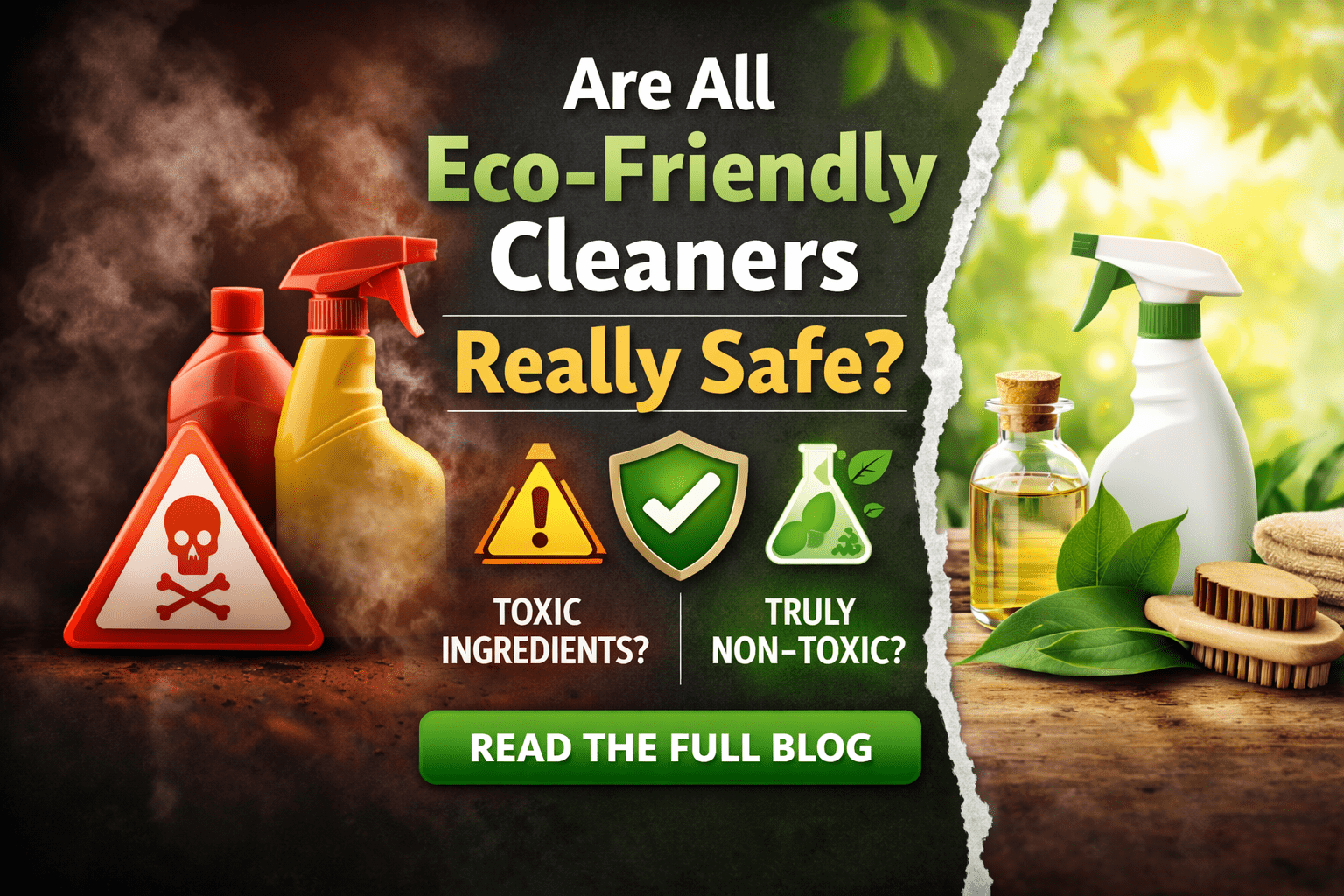
The term “eco-friendly” has become a powerful driver in the cleaning industry. For distributors and facility managers across India, stocking products labeled as “green,” “natural,” or “eco-friendly” seems like a straightforward way to meet sustainability goals and appeal to health-conscious clients. However, this broad terminology can be misleading. The critical question remains: are all cleaners marketed as eco-friendly genuinely safe for people and the environment?
The answer is no. “Eco-friendly” is not a regulated term, which allows for a wide spectrum of products, some of which are little more than traditional chemicals with green labels. a practice known as “greenwashing.” True safety and sustainability are rooted in scientific principles and verified by credible, third-party certifications. For decision-makers in the facility management and distribution sectors, understanding how to distinguish scientifically-backed green solutions from mere marketing claims is essential for ensuring genuine safety and performance.
Table of Contents
- Chemical Management: The Truth Behind the Label
- Asset Preservation: The Risk of Unverified Formulations
- Indoor Air Quality: The Dangers of Hidden Fragrances
- The ROI of Certified vs. Counterfeit Green Products
- Future-Proofing Your Business with Verifiable Safety
- About Sanirite
- Conclusion
- Frequently Asked Questions
Chemical Management: The Truth Behind the Label
The promise of eco-friendly cleaners is a safer, more streamlined chemical inventory. However, without proper vetting, this promise can quickly fall apart.
- The “Greenwashing” Problem: Some manufacturers use vague terms like “plant-based” or “natural” while still including harsh synthetic surfactants or preservatives. This creates a false sense of security. A distributor might stock a product believing it’s non-hazardous, only to find its Safety Data Sheet (SDS) reveals significant handling risks or disposal requirements.
The Certified Solution: A truly safe green cleaning program is built on transparency and verification. Products with certifications like GreenPro from the Confederation of Indian Industry (CII) have been rigorously tested to ensure their ingredients are non-toxic, biodegradable, and sustainably sourced. This third-party validation removes the guesswork, assuring distributors and facility managers that their inventory is genuinely safe and compliant.
Asset Preservation: The Risk of Unverified Formulations
Not all “green” formulas are created equal when it comes to protecting valuable facility assets. An improperly formulated eco-friendly cleaner can be just as damaging as a traditional one.
- The pH Pitfall: Some “natural” cleaners, particularly those based on vinegar (acetic acid) or citrus oils (citric acid), are highly acidic. While effective on certain soils, they can etch stone surfaces like marble, corrode metal fixtures, and damage the seals on equipment over time. This leads to costly repairs and replacements, undermining the financial benefits of the cleaner.
The Power of Certified Chemistry: Scientifically formulated, certified green facility care products are designed for both efficacy and material compatibility. They are typically pH-neutral and undergo extensive testing to ensure they are non-corrosive. This preserves the integrity of floors, countertops, and machinery, extending their lifespan and delivering true long-term value.
Indoor Air Quality: The Dangers of Hidden Fragrances

One of the biggest differentiators between truly safe and falsely advertised eco-friendly cleaners is their impact on the air.
- The Fragrance Fallacy: Many “green” cleaners boast pleasant “natural” scents like lavender or lemon. However, the term “fragrance” on a label can hide a cocktail of synthetic chemicals and Volatile Organic Compounds (VOCs). These VOCs can cause respiratory irritation, trigger allergies, and degrade Indoor Air Quality (IAQ), directly contradicting the goal of creating a healthier environment.
- The Odourless Standard of Clean: Advanced eco-friendly cleaning solutions prioritize health by being low-VOC and often fragrance-free. Instead of masking bad smells, they use technologies like bio-enzymes or stabilized hydrogen peroxide to eliminate the source of the odour. A facility cleaned with these products doesn’t smell like artificial pine; it smells like nothing at all. the true scent of clean.
The ROI of Certified vs. Counterfeit Green Products
For distributors and facility managers, the financial implications of choosing the right eco-friendly products are significant.
- The Hidden Costs of Greenwashing: Opting for a cheaper, uncertified “green” product often leads to higher long-term costs. Ineffective performance may require more product and labour to get the job done. Hidden corrosive properties can damage assets, and hazardous ingredients can lead to higher disposal fees and potential liability issues.
The Assured ROI of Certification: Investing in GreenPro certified products provides a guaranteed Return on Investment (ROI). These products are proven to perform effectively, often in concentrated formulas that reduce in-use cost. Their certified safety profile minimizes risks related to worker health, asset damage, and regulatory non-compliance, protecting the bottom line.
Future-Proofing Your Business with Verifiable Safety
The market is becoming more sophisticated. Clients, employees, and regulators are demanding proof of sustainability claims.
- The Risk of Reputational Damage: A distributor or facility management company that promotes unverified “eco-friendly” products risks being accused of greenwashing. If a product causes harm to an employee or damages a client’s property, the liability can be severe.
The Advantage of Authentic Sustainability: Building a sustainable cleaning strategy around certified products is a powerful business differentiator. It demonstrates an authentic commitment to health and safety that builds trust with clients. It also ensures compliance with evolving environmental and workplace safety regulations, future-proofing your business in a market that increasingly values transparency and integrity.
About Sanirite
At Sanirite, we redefine hygiene through eco-innovation. We deliver powerful, bio-based cleaning solutions powered by green chemistry to protect people, spaces, and the planet. We are your trusted partner in creating safer, more sustainable environments.
Conclusion
Not all eco-friendly cleaners are truly safe. The key to navigating this landscape is to look beyond marketing claims and demand scientific proof. Third-party certifications like GreenPro provide the assurance that a product meets the highest standards of safety, performance, and sustainability. For distributors and facility managers in India, choosing certified green products is the only way to guarantee the health of building occupants, the preservation of assets, and the long-term success of their business.
Frequently Asked Questions (FAQ)
What is "greenwashing"?
Greenwashing is the practice of making misleading or unsubstantiated claims about the environmental benefits of a product. A company might use green packaging and “natural” imagery while its product still contains hazardous chemicals.
How can I verify if an eco-friendly cleaner is actually safe?
Look for credible, third-party certifications. In India, the most reputable mark is GreenPro from the Confederation of Indian Industry (CII). Also, always request and review the product’s Safety Data Sheet (SDS) to understand its true hazard profile.
Are "plant-based" cleaners always safe?
Not necessarily. While the source ingredient is natural, the final formulation could still be corrosive (like high-concentration vinegar) or contain synthetic additives. Safety depends on the final chemical formulation and its pH level, not just its origin.
Why are some eco-friendly products more expensive?
Certified eco-friendly products often use higher-quality, sustainably sourced ingredients and undergo expensive testing and certification processes to validate their safety and performance. While the initial price may be higher, the total cost of ownership is often lower.
Can a product be both a powerful cleaner and truly eco-friendly?
Absolutely. Modern green chemistry has produced highly effective cleaning agents, such as advanced surfactants and bio-enzymes, that can outperform traditional chemicals while being fully biodegradable and non-toxic.
Tags: Are eco-friendly cleaners safe, greenwashing, greenpro certification, safe cleaning products, natural cleaner dangers, non-toxic cleaners, certified green cleaners