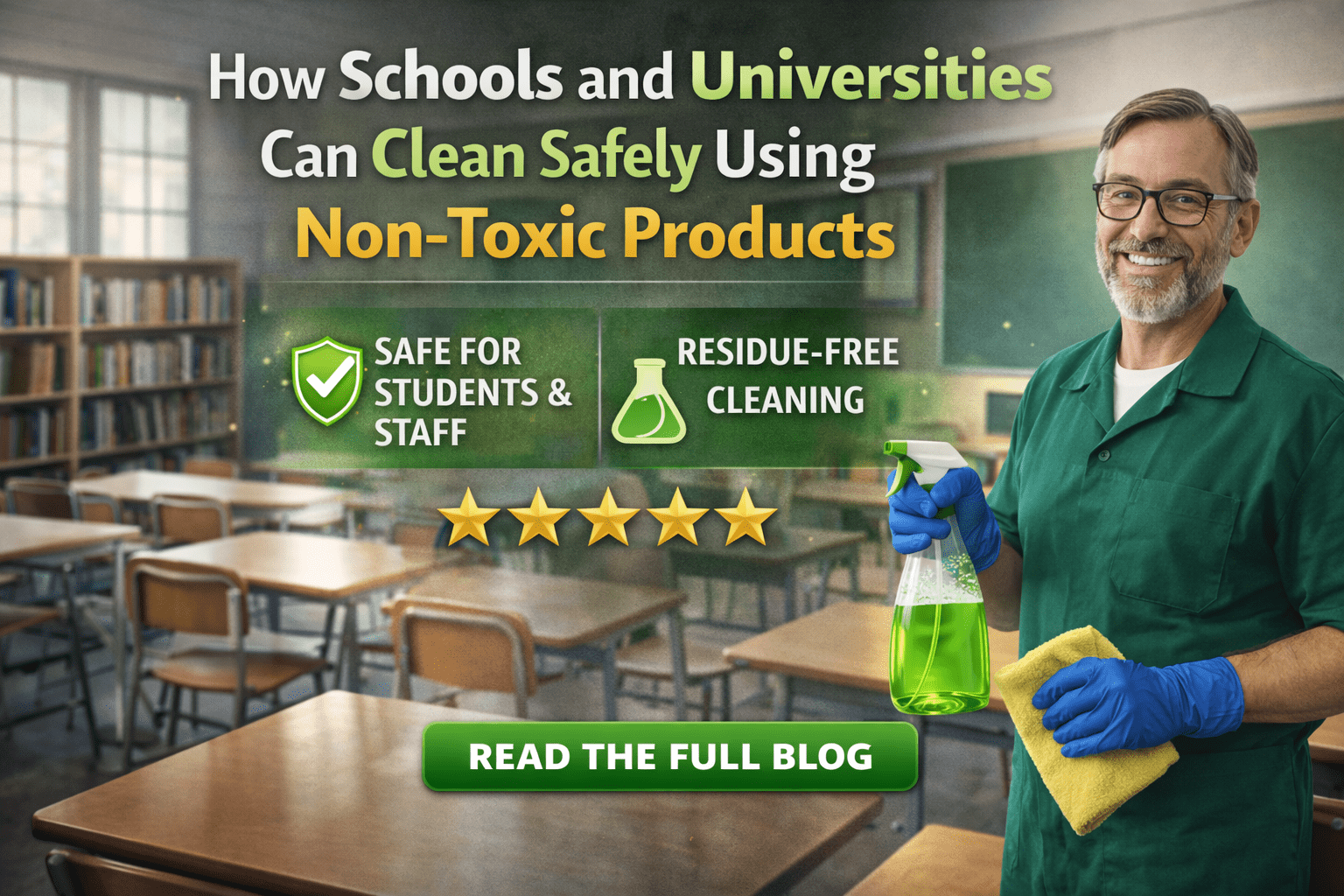
Educational institutions are tasked with a dual responsibility: providing high-quality education and ensuring the safety of their students and staff. While curriculum and campus security often dominate the conversation, the cleanliness of the physical environment plays a silent yet critical role in student success. From kindergartens to sprawling university campuses, schools are high-traffic zones that act as breeding grounds for germs. The traditional response has been to deploy aggressive industrial cleaners to sterilize surfaces.
However, research increasingly shows that the harsh chemicals used to “clean” schools may be doing more harm than good. Toxic residues and fumes can trigger asthma, cause allergic reactions, and negatively impact cognitive function. The shift toward non-toxic, green cleaning products is not just an environmental trend; it is a health imperative. By adopting safer cleaning protocols, educational administrators can create a learning environment that protects students’ health, preserves campus facilities, and models sustainability for the next generation.
Table of Contents
- Streamlining Chemical Management for Campus Safety
- Preserving Educational Facilities and Assets
- Improving Student Health and Attendance with Better Air Quality
- The Financial Benefits of Green Cleaning in Education
- Future-Proofing Your Institution’s Sustainability Goals
- Conclusion
- About Sanirite
- Frequently Asked Questions
Streamlining Chemical Management for Campus Safety
Janitorial closets in schools are often filled with a confusing mix of bleaches, ammonia-based glass cleaners, and acidic bowl cleaners. In a university setting with multiple buildings and a large custodial staff, managing this inventory is a logistical nightmare. More critically, the presence of these toxic substances poses a significant safety risk. Accidental spills, improper mixing of chemicals (like bleach and ammonia), or students gaining access to unsecured closets can lead to serious emergencies.
Implementing a green cleaning program drastically reduces these risks. By switching to a simplified system of concentrated, non-toxic bio-cleaners, schools can eliminate the need for dozens of hazardous products. A single multi-surface green cleaner can often replace three or four traditional products. This consolidation simplifies training for custodial staff, reduces the likelihood of chemical accidents, and creates a safer campus environment where the risk of toxic exposure is minimized.
Preserving Educational Facilities and Assets
Schools and universities operate on tight budgets, and facility maintenance is a major line item. Floors in hallways endure thousands of footsteps daily, desks are scribbled on, and restrooms see constant use. Traditional harsh chemicals may remove dirt quickly, but they often strip floor wax, corrode fixtures, and degrade surfaces over time. This accelerates wear and tear, forcing schools to spend money on premature repairs or replacements. funds that could otherwise go toward educational resources.
Safe, non-toxic cleaning extends the life of these assets. Facility care products that utilize neutral pH formulas and bio-enzymes clean effectively without being corrosive. For example, enzyme-based floor cleaners continue to work after application, digesting organic grime in grout lines without eating away at the flooring material. By maintaining the integrity of physical assets, schools ensure their facilities remain welcoming and functional for decades, maximizing the taxpayer or tuition investment.
Improving Student Health and Attendance with Better Air Quality
There is a direct link between indoor environmental quality and student performance. Poor Indoor Air Quality (IAQ) is a known trigger for asthma, which is one of the leading causes of school absenteeism. Conventional cleaning products release Volatile Organic Compounds (VOCs) that linger in the air long after the janitor has left. In classrooms with poor ventilation, these fumes can cause headaches, fatigue, and difficulty concentrating.
Switching to eco-friendly cleaning solutions is an immediate way to improve IAQ. Green-certified products are typically low-VOC or fragrance-free, removing the chemical pollutants that irritate sensitive respiratory systems. A healthier classroom environment means fewer asthma attacks, fewer sick days for both students and teachers, and better focus during lessons. When students feel well, they learn well.
The Financial Benefits of Green Cleaning in Education
Budget committees often hesitate to switch to green cleaning, fearing higher costs. However, when analyzed comprehensively, non-toxic cleaning programs often result in significant savings.
Cost-Efficiency Through Concentration
Most green cleaning systems utilize hyper-concentrated products dispensed through automated dilution systems. This prevents the “glug-glug” method where staff pour arbitrary amounts of chemicals, leading to waste. Precise dilution ensures schools pay only for the cleaning power they need, significantly lowering the cost per gallon compared to ready-to-use alternatives.
Reduced Liability and Healthcare Costs
Custodial staff in schools have high rates of occupational injury due to chemical exposure. By removing toxic substances, schools reduce workers’ compensation claims and sick leave. Furthermore, a healthier student body means the school secures its funding (often tied to attendance rates) and avoids potential liability issues related to environmental health hazards.
Operational Efficiency
Multi-purpose green cleaners allow custodial staff to clean more efficiently. Instead of switching bottles for every different surface, they can use one safe product for desks, glass, and walls. This time-saving adds up across a large campus, allowing staff to focus on deep cleaning and maintenance tasks.
Future-Proofing Your Institution’s Sustainability Goals
Sustainability is no longer an elective subject; it is a core value for modern educational institutions. Universities are competing to be “Green Campuses” to attract environmentally conscious students, while K-12 schools are integrating sustainability into their curriculums. Continuing to use toxic chemicals contradicts these values and leaves institutions vulnerable to changing regulations regarding chemical safety in schools.
Adopting a comprehensive sustainable cleaning strategy aligns operational practices with educational values. It future-proofs the institution against stricter environmental laws and demonstrates a commitment to the well-being of the planet. It turns the school building itself into a teaching tool, showing students that cleanliness does not have to come at the cost of the environment.
Conclusion
The transition to non-toxic cleaning in schools and universities is a strategic move that benefits everyone. It protects the health of students and staff, preserves valuable facilities, and supports financial stability through efficiency. By embracing green chemistry, educational leaders can ensure that their institutions are safe havens for learning, not sources of chemical exposure. The path to a cleaner, safer future begins with the products we use today.
About Sanirite
At Sanirite, we redefine hygiene through eco-innovation. We deliver powerful, bio-based cleaning solutions powered by green chemistry to protect people, spaces, and the planet. We are your trusted partner in creating safer, more sustainable environments.
Frequently Asked Questions (FAQ)
Are non-toxic cleaners effective against school germs and viruses?
Yes. Modern green disinfectants are formulated to meet strict safety standards while being EPA-registered to kill common school pathogens, including flu viruses and bacteria, without the harsh side effects of bleach
Will green cleaning cost our school district more money?
Typically, no. While the unit price of some green products may appear higher, the use of concentrated systems and the reduction in product waste usually result in net savings. Additionally, savings from reduced absenteeism and asset preservation add to the financial benefit.
Do these products have strong smells?
No. Most non-toxic cleaning products are fragrance-free or have very mild, natural scents. This is intentional to improve indoor air quality and prevent allergic reactions triggered by synthetic fragrances found in traditional cleaners.
Is it difficult to retrain custodial staff on green products?
The transition is generally smooth. Because green cleaning programs often reduce the number of products used, the cleaning process becomes simpler. Staff usually appreciate working with products that don’t cause skin irritation or respiratory issues.
Can switching to green cleaning help our university get LEED certified?
Absolutely. Using certified green cleaning products and equipment contributes significant points toward LEED (Leadership in Energy and Environmental Design) certification for Existing Buildings: Operations & Maintenance.
Tags: school cleaning safety, non-toxic products for universities, green cleaning in education, student health indoor air quality, eco-friendly school maintenance, sustainable campus cleaning