Stainless steel is the workhorse material of modern design. From gleaming commercial kitchen appliances to sophisticated architectural panels and high-end elevator doors, its reputation is built on durability and a clean, professional aesthetic. However, that “stainless” name is a bit of a misnomer. While resistant to rust, it is surprisingly susceptible to damage from improper cleaning, leaving behind streaks, haze, or even permanent corrosive marks.
For facility managers and maintenance professionals, the challenge is clear: how do you remove fingerprints, grease, and grime without dulling the finish or causing long-term harm? The traditional answer has often been aggressive, oil-based polishes or harsh chemicals that provide a temporary shine but can lead to buildup and surface degradation. The true secret to preserving stainless steel lies in using the right products and techniques a method that values preservation as much as presentation, often found in advanced green chemistry.
Table of Contents
Streamlining Chemical Management for Steel Surfaces
Walk through any large facility, and you will see stainless steel everywhere. The janitorial cart, however, might carry a specific aerosol can just for this purpose. These specialty polishes add another item to an already crowded chemical inventory. This approach complicates procurement, increases costs, and raises the risk of staff using the wrong product on the wrong surface for instance, using an oily steel polish on a food-prep counter.
A modern green cleaning program focuses on simplification. The goal is to find versatile, high-performance cleaners that can handle multiple tasks. Instead of a separate, oil-heavy polish, facilities can use a single pH-neutral, multi-surface green cleaner for daily fingerprint removal. This consolidation reduces the number of chemicals purchased and stored, simplifies safety training, and ensures a consistent, effective cleaning process across all surfaces, including stainless steel.
Preserving the Finish: The Science of Cleaning Stainless Steel
Stainless steel gets its clean look from a very thin, invisible layer of chromium oxide that protects the metal from corrosion. The biggest mistake in cleaning is using products that damage this protective layer. Abrasive powders, steel wool, and, most critically, chloride-based cleaners (like bleach) can break down this passive film, leading to pitting and rust. Similarly, oily polishes can build up over time, attracting more dust and creating a dull, hazy appearance that is difficult to remove.
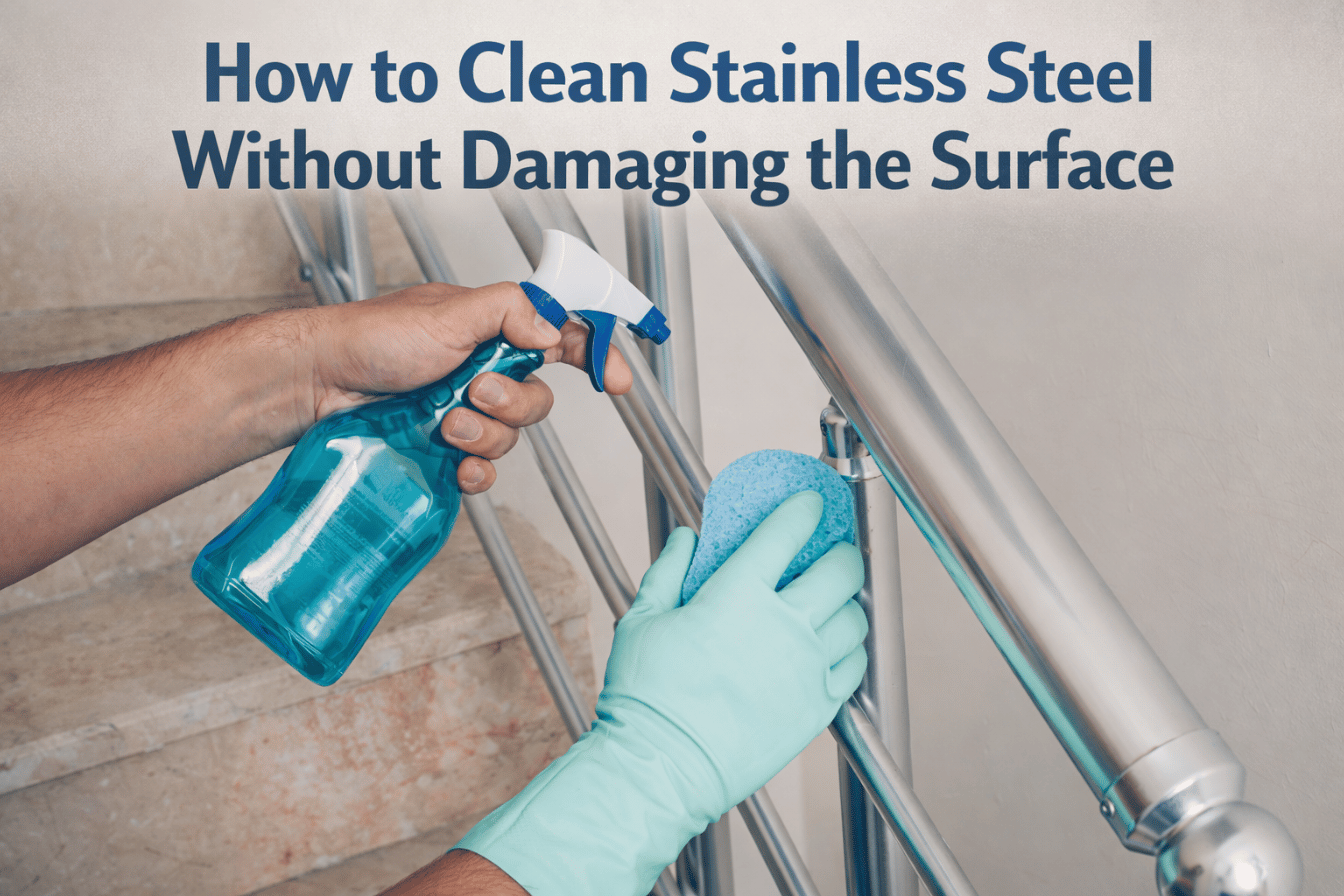
The best way to preserve the surface is by using gentle, non-corrosive facility care products. For routine cleaning, a pH-neutral cleaner applied with a microfiber cloth is ideal. For tougher grease, a water-based bio-enzymatic degreaser can be used. These cleaners work without being abrasive or chemically aggressive. Always remember to wipe in the direction of the metal’s grain to avoid micro-scratches. By working with the material’s properties instead of against them, you maintain its original luster and extend its life indefinitely.
Improving Air Quality by Ditching Oil-Based Polishes
Traditional stainless steel polishes often contain petroleum distillates and other volatile organic compounds (VOCs). When sprayed, especially in enclosed spaces like elevators or small kitchens, these chemicals are atomized into the air. Staff and building occupants can inhale these fumes, which may cause headaches, respiratory irritation, and other health issues. This directly compromises the Indoor Air Quality (IAQ) that facility managers work so hard to maintain.
Switching to eco-friendly cleaning solutions is a direct investment in healthier air. Water-based, VOC-free cleaners remove smudges and fingerprints without leaving behind a cloud of toxic fumes or an oily residue. This creates a safer working environment for cleaning staff and a more pleasant experience for anyone using the space. A truly clean facility should not smell of chemicals; it should have no scent at all.
The ROI of Proper Stainless Steel Maintenance
Protecting stainless steel assets is a clear example of how thoughtful cleaning delivers a significant Return on Investment (ROI). The cost of replacing a pitted, corroded elevator door or a full set of commercial kitchen panels is substantial.
Reduced Labor Costs
Oil-based polishes create a cycle of cleaning. The oily film attracts dust and fingerprints, requiring staff to re-clean the surface more frequently. A proper, residue-free cleaner leaves the surface truly clean, meaning it stays that way for longer. Staff can then focus on other critical tasks, improving overall labor efficiency.
Asset Preservation
The primary ROI comes from avoiding replacement costs. By steering clear of corrosive and abrasive chemicals, you protect the multi-thousand-dollar investment in your fixtures and appliances. Gentle cleaning is a maintenance strategy that pays for itself by maximizing the lifespan of your assets.
Enhanced Brand Image
Streaky, smudged, or corroded stainless steel looks unprofessional and poorly maintained. In a hotel lobby, corporate headquarters, or restaurant, the appearance of your facility directly reflects on your brand. A pristine, gleaming surface communicates excellence and attention to detail, which can impact customer perception and trust.
Future-Proofing Your Assets with Sustainable Care
Sustainability is increasingly becoming a key performance indicator for facility management. Using aerosolized, petroleum-based products runs counter to the goals of reducing VOC emissions and minimizing environmental impact. As regulations around indoor air quality and chemical usage become more stringent, facilities that rely on outdated polishes may face compliance challenges.
Adopting a sustainable cleaning strategy for all surfaces, including stainless steel, aligns your operations with modern standards of environmental stewardship. Using biodegradable, water-based cleaners is a proactive measure that demonstrates a commitment to health and sustainability. It ensures your cleaning protocols are not only safe for your assets but also for people and the planet.
About Sanirite
At Sanirite, we redefine hygiene through eco-innovation. We deliver powerful, bio-based cleaning solutions powered by green chemistry to protect people, spaces, and the planet. We are your trusted partner in creating safer, more sustainable environments.
Conclusion
Cleaning stainless steel is not about slathering it in a shiny oil; it is about respecting the material. The best approach is to remove what does not belong the fingerprints, grease, and grime while preserving the integrity of the protective finish. By choosing pH-neutral, non-corrosive cleaners and training staff on proper techniques, you can keep your stainless steel assets looking brand new for years. This method saves money, protects health, and upholds the clean, professional image that stainless steel was designed to convey.
Frequently Asked Questions (FAQ)
What is the "grain" of stainless steel and why does it matter?
The grain refers to the faint directional lines visible on the surface of most stainless steel finishes. Wiping against the grain can create tiny scratches and trap residue in the grooves. Always wipe parallel to these lines for the best results.
Can I use bleach or chloride-based sanitizers on stainless steel?
You should avoid it whenever possible. Chlorides are the number one enemy of stainless steel’s protective layer and can cause pitting and rust. If you must use a chloride sanitizer, ensure it is diluted correctly, contact time is minimized, and the surface is thoroughly rinsed with clean water afterward.
Why do some stainless steel cleaners leave streaks?
Streaks are often caused by an oily residue left behind by the cleaner or by using a dirty cloth. High-quality, water-based cleaners that evaporate fully and are applied with a clean microfiber cloth will leave a streak-free finish.
Is vinegar and water a safe way to clean stainless steel?
While often recommended for home use, vinegar is an acid. For occasional light cleaning, it can be effective, but regular use of any acid can risk damaging the finish over time. A professional, pH-neutral cleaner is a safer bet for commercial assets.
How do I remove heat tint (blue or brown stains) near a stove?
Heat tint is a discoloration caused by high temperatures. It is difficult to remove without specialty products. There are specific heat tint removers available, but they are often acid-based and should be used with extreme caution and only as a last resort.
Tags: clean stainless steel, remove streaks from stainless steel, stainless steel maintenance, safe cleaner for steel appliances, non-damaging steel polish, commercial kitchen cleaning