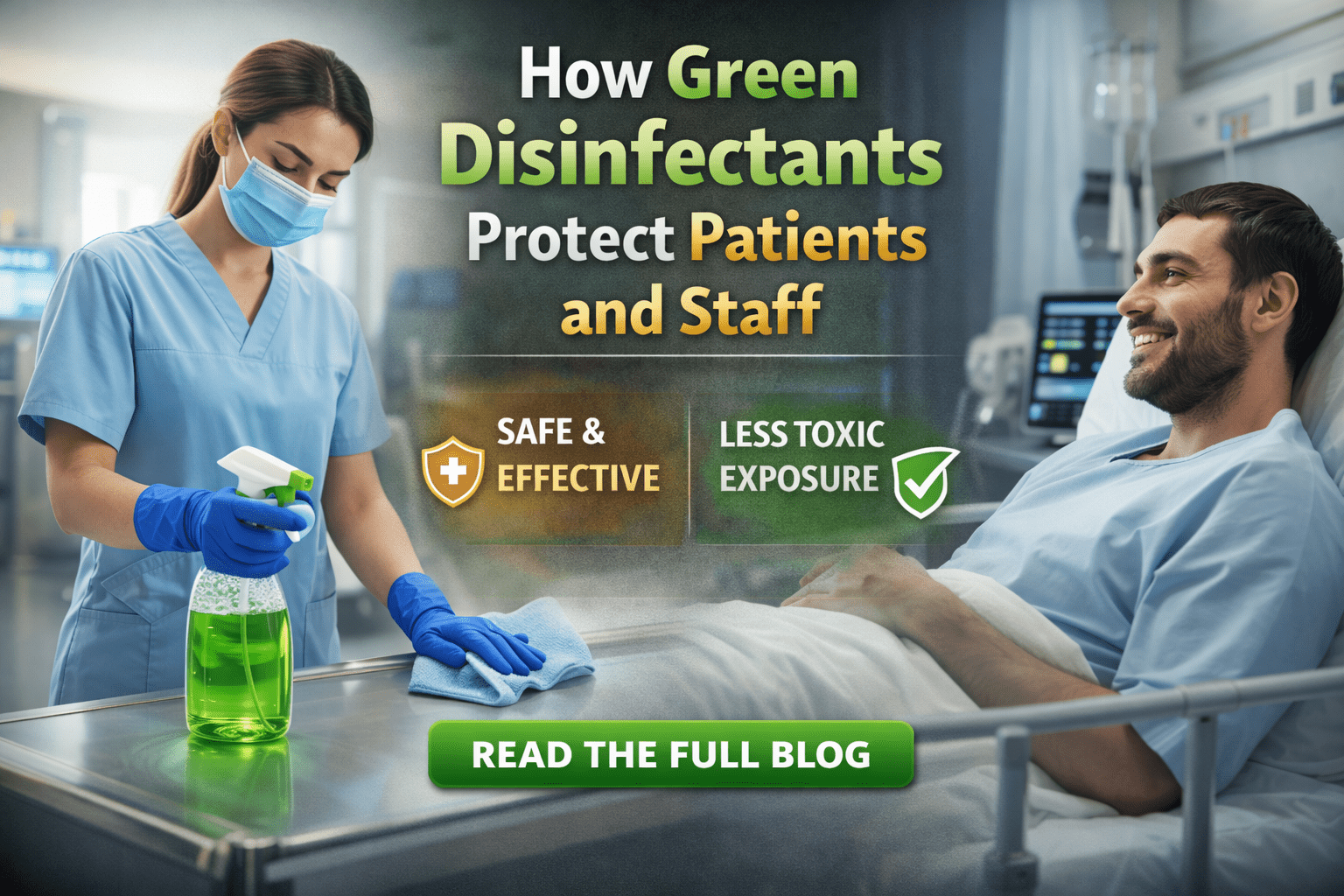
The primary mission of any healthcare facility is to heal. Yet, a hidden conflict exists within their walls. The aggressive disinfectants traditionally used to combat pathogens and prevent healthcare-associated infections (HAIs) can themselves introduce health risks for both patients and the clinical staff dedicated to their care. The familiar, pungent smell of conventional cleaners is not a sign of ultimate safety, but a marker of airborne chemicals that can irritate lungs and compromise well-being.
This creates a critical challenge: how can hospitals maintain the highest standards of microbial control without exposing vulnerable individuals to potentially harmful substances? The answer lies in the evolution of disinfection technology. Modern green disinfectants provide a powerful solution, offering hospital-grade efficacy against dangerous pathogens while prioritizing the health of people and the integrity of the facility. They prove that true protection involves eliminating threats, not replacing one with another.
Table of Contents
- Optimizing Disinfectant Protocols in Healthcare
- Safeguarding Medical Equipment and Facility Surfaces
- Enhancing Indoor Air Quality for Better Health Outcomes
- The Strong ROI of Switching to Green Disinfectants
- Future-Proofing Your Facility’s Health and Safety Standards
- About Sanirite
- Conclusion
- Frequently Asked Questions
Optimizing Disinfectant Protocols in Healthcare
In a high-stakes hospital environment, the environmental services (EVS) team manages a complex arsenal of chemicals. There are specific products for cleaning floors, others for high-touch surfaces, and potent agents reserved for terminal cleaning in operating rooms. This complexity is fraught with risk. It complicates EVS training, increases the odds of using the wrong chemical on a sensitive surface, and presents logistical challenges for storage and safety compliance.
A shift to a streamlined green cleaning program using advanced green disinfectants simplifies this entire process. Many modern formulations, such as those based on accelerated hydrogen peroxide, serve as broad-spectrum, one-step cleaner-disinfectants. This allows a single product to be used for multiple applications, from daily cleaning to critical disinfection tasks. This consolidation reduces chemical inventory, makes training more efficient, and lowers the risk of application errors, ensuring consistent and effective protection.
Safeguarding Medical Equipment and Facility Surfaces
Hospitals are filled with expensive, sensitive assets. Patient monitors, diagnostic carts, stainless steel instruments, and specialized flooring all represent significant capital investments. Traditional disinfectants, particularly those based on bleach or quaternary ammonium compounds, can be corrosive and degrading over time. They can damage plastic housings, cloud screens, corrode metal fixtures, and strip the protective finish from floors, leading to premature aging and costly replacements.
Green disinfectants are designed to offer powerful efficacy with superior material compatibility. Being non-corrosive and often pH-neutral, these facility care products clean and disinfect without harming underlying surfaces. This gentle-yet-powerful action extends the life of critical equipment and preserves the appearance of the hospital environment. By preventing chemical-induced damage, facilities can protect their investments and maintain a higher standard of care.
Enhancing Indoor Air Quality for Better Health Outcomes
Indoor air quality (IAQ) is a crucial component of a healing environment. Patients, especially those with respiratory conditions, the elderly, and infants in neonatal units, are extremely susceptible to airborne chemical irritants. Conventional disinfectants release Volatile Organic Compounds (VOCs) that can trigger asthma, cause headaches, and create an unpleasant, anxiety-inducing atmosphere. For healthcare staff, long-term daily exposure is a leading cause of occupational asthma.
Adopting green disinfectants is a direct investment in the respiratory health of every person in the building. These low-VOC or zero-VOC eco-friendly cleaning solutions achieve full disinfection without leaving behind a cloud of harmful fumes. For example, hydrogen peroxide-based disinfectants break down into simple water and oxygen. This results in a space that is not only microbially clean but also has fresh, breathable air, fostering a true environment of healing and well-being.
The Strong ROI of Switching to Green Disinfectants
The financial benefits of moving to a green disinfectant program extend far beyond the procurement price. Hospital administrators who analyze the total Return on Investment (ROI) find a compelling business case for making the switch.
Improved Patient and Staff Safety
By reducing exposure to harsh chemicals, hospitals can lower rates of occupational illness and workers’ compensation claims among staff. For patients, better air quality and less chemical residue can contribute to faster recovery times and higher satisfaction scores (HCAHPS).
Operational Efficiency
Many green disinfectant systems utilize ultra-concentrated formulas with automated dilution control. This ensures every drop of product is used effectively, eliminating waste from manual mixing and guaranteeing the correct potency for every task, which is vital for infection control.
Asset Protection
The non-corrosive nature of green disinfectants translates into direct savings. By extending the life of flooring, medical devices, and furniture, the hospital avoids significant capital expenditures on repairs and replacements.
Future-Proofing Your Facility’s Health and Safety Standards
The healthcare landscape is continuously advancing toward higher standards of patient safety and environmental responsibility. Accreditation bodies and public health organizations are increasingly focused on the holistic health of a facility, which includes minimizing chemical exposure. Hospitals still relying on outdated, harsh disinfectants risk falling behind these evolving benchmarks.
Implementing a sustainable cleaning strategy centered on green disinfectants is a forward-thinking decision. It proactively aligns the facility with leading health and wellness standards, such as WELL and LEED. This demonstrates a deep commitment to the safety of patients and staff, positioning the hospital as a leader in creating environments that are optimized for healing and long-term well-being.
About Sanirite
At Sanirite, we redefine hygiene through eco-innovation. We deliver powerful, bio-based cleaning solutions powered by green chemistry to protect people, spaces, and the planet. We are your trusted partner in creating safer, more sustainable environments.
Conclusion
Green disinfectants are a critical innovation for modern healthcare. They resolve the conflict between effective infection control and exposure to harmful chemicals. By adopting these advanced solutions, hospitals can offer superior protection against pathogens while safeguarding the respiratory health of patients and staff. This holistic approach protects valuable assets, improves operational efficiency, and ultimately fosters a safer, healthier environment where the primary mission of healing can thrive.
Frequently Asked Questions (FAQ)
What does "food-grade" or "food-safe" mean for a cleaning chemical?
It means the product has been certified by a regulatory body (like the NSF) as safe for use on surfaces that come into direct contact with food. If trace amounts are accidentally left on a surface after rinsing, they will not cause harm.
Are food-grade cleaners as effective at killing germs as traditional sanitizers?
Yes. Certified food-grade sanitizers are required to meet strict efficacy standards, proving they can kill a high percentage of common foodborne pathogens like E. coli and Salmonella within a specific contact time.
Do we still need to rinse surfaces after using a food-grade sanitizer?
It depends on the product. Some food-grade sanitizers are “no-rinse” formulas, meaning they can be left to air dry after application. Always follow the manufacturer’s instructions on the product label.
Can these products effectively cut through heavy grease in a kitchen?
Absolutely. Modern food-grade degreasers use advanced surfactant technology to break down and lift heavy grease and carbonized soils without relying on toxic solvents or high alkalinity.
Will switching to food-grade green chemicals satisfy our health inspector?
Yes. In fact, it will likely be viewed very favorably. Using certified food-grade products demonstrates a proactive approach to food safety that goes beyond the minimum requirements, showing a deep commitment to preventing both microbial and chemical hazards.
Tags: food-grade green chemicals, kitchen hygiene, food-safe cleaners, commercial kitchen cleaning, restaurant safety, green kitchen solutions, non-toxic degreaser