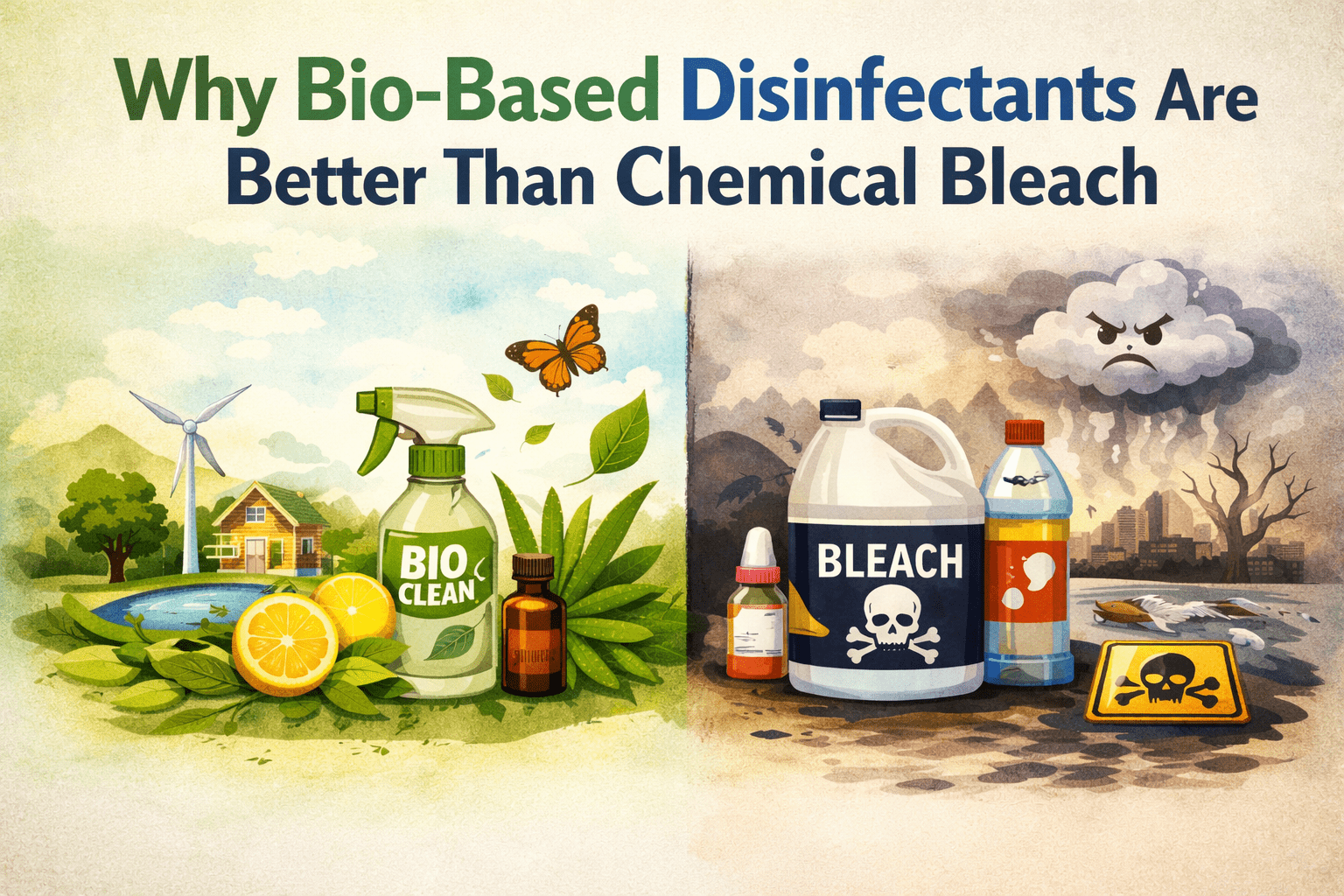
For generations, the sharp, unmistakable smell of bleach has been equated with “clean.” Sodium hypochlorite, the active ingredient in bleach, is a powerful, fast-acting disinfectant that has been a go-to weapon against germs in homes, hospitals, and businesses. Its power is undeniable, but so are its drawbacks. Bleach is a harsh, corrosive, and volatile chemical that poses significant risks to people, surfaces, and the environment.
The science of disinfection has advanced significantly. Today, a new class of bio-based disinfectants offers the same germ-killing efficacy without the collateral damage. Powered by ingredients like thymol (from thyme oil), citric acid, or accelerated hydrogen peroxide, these modern solutions are challenging the long-held dominance of bleach. They prove that it is possible to achieve a truly sterile environment without resorting to a chemical that destroys assets and compromises health.
Streamlining Chemical Management: Moving Beyond Bleach
Bleach is notoriously unstable. It has a short shelf life, begins to degrade as soon as it is opened, and loses its effectiveness when exposed to heat or sunlight. Furthermore, it is dangerously reactive. It cannot be mixed with ammonia (creates toxic chloramine gas) or acids (creates chlorine gas). This requires facilities to maintain strict, complex protocols to prevent accidental mixing, complicating chemical storage and staff training.
Switching to a modern green cleaning program with bio-based disinfectants simplifies chemical management. These products are typically stable, with longer shelf lives and less sensitivity to storage conditions. Most importantly, they are far less reactive, reducing the risks associated with improper use. This consolidation allows facilities to streamline their inventory to a few core products, making training easier and creating a much safer environment for custodial staff.
Preserving Your Assets from Corrosive Damage
The very power of bleach is also its greatest weakness: it is an indiscriminate oxidizer. When you use bleach to kill a germ on a surface, it also attacks the surface itself. It is highly corrosive to metals, causing faucets, fixtures, and stainless steel equipment to pit and rust over time. It permanently discolors fabrics and carpets, and it can degrade plastics and rubber seals with repeated exposure.
Bio-based disinfectants and other eco-friendly facility care products are designed for targeted efficacy. They kill pathogens without causing collateral damage. Disinfectants based on thymol or citric acid are non-corrosive and non-staining. Accelerated hydrogen peroxide breaks down into harmless water and oxygen after use. By choosing these alternatives, facilities protect their expensive infrastructure from restroom fixtures to high-end flooring from the destructive effects of bleach, significantly extending asset life.
Improving Air Quality and User Safety
The harsh fumes from bleach are a major source of poor Indoor Air Quality (IAQ). The released chlorine gas is a potent respiratory irritant that can trigger asthma attacks and cause breathing difficulties, especially for children, the elderly, or those with compromised health. For cleaning staff who use it daily, long-term exposure can lead to chronic respiratory conditions. This is a high price to pay for disinfection.
Bio-based eco-friendly cleaning solutions offer a breath of fresh air literally. Products derived from plant oils like thyme have a mild, natural scent and are low in Volatile Organic Compounds (VOCs). Hydrogen peroxide-based disinfectants have no lingering fumes. Switching away from bleach immediately creates a healthier environment for both building occupants and the EVS teams responsible for cleaning. It eliminates a primary cause of chemical-induced irritation and injury, promoting a safer workplace.
The Financial ROI of Switching from Bleach
Many organizations stick with bleach because it appears cheap. A bottle of bleach is inexpensive, but this view ignores the significant hidden costs associated with its use. The true Return on Investment (ROI) of switching to bio-based alternatives is compelling.
Reduced Damage Costs
The cost of replacing a bleach-stained carpet, a rusted stainless steel counter, or pitted chrome fixtures far outweighs any savings on the chemical itself. Bio-based disinfectants protect these assets, avoiding premature replacement costs.
Lower Liability and Healthcare Expenses
By removing a major cause of staff respiratory issues and chemical burns, organizations can lower their workers’ compensation claims and associated insurance premiums. A healthier workforce is also a more productive one, with less absenteeism.
Material Compatibility
Bleach is ineffective in the presence of organic soil. This means staff must perform a two-step process: clean first, then disinfect. Many modern bio-based disinfectants are cleaner-disinfectants, meaning they can effectively clean and disinfect in one step, saving significant labor time and costs.
Future-Proofing Your Disinfection Protocols
The regulatory and social landscape is shifting towards sustainability. Institutions are increasingly judged on their environmental footprint. Bleach production is energy-intensive, and its byproducts can include harmful organochlorines that persist in the environment. As regulations around chemical safety and disposal tighten, continued reliance on bleach may become a liability.
Adopting a sustainable cleaning strategy based on bio-based disinfectants aligns your facility with modern health and environmental standards. These products are biodegradable, derived from renewable resources, and have a much gentler environmental profile. Making the switch future-proofs your organization against stricter regulations and demonstrates a clear commitment to the well-being of people and the planet.
About Sanirite
At Sanirite, we redefine hygiene through eco-innovation. We deliver powerful, bio-based cleaning solutions powered by green chemistry to protect people, spaces, and the planet. We are your trusted partner in creating safer, more sustainable environments.
Conclusion
The era of equating the smell of bleach with cleanliness is coming to an end. While it remains a powerful tool, its risks to health, property, and the environment are too significant to ignore. Bio-based disinfectants and advanced green chemistry offer a smarter path forward. They provide hospital-grade efficacy without the toxic side effects, proving that a facility can be both hygienically sterile and fundamentally safe. The best way to protect people from germs is not to expose them to a different kind of danger in the process.
Frequently Asked Questions (FAQ)
Are bio-based disinfectants as strong as bleach?
Yes. To be sold as a disinfectant in most countries, a product must pass rigorous, government-regulated tests to prove it kills specific pathogens (like viruses and bacteria) within a set time. Certified bio-based disinfectants meet the same standards of efficacy as bleach.
Do bio-based disinfectants work as quickly as bleach?
It depends on the formulation. While bleach is very fast-acting, many modern bio-based disinfectants, like those with accelerated hydrogen peroxide, have contact times as short as 30 seconds to one minute, making them highly effective for rapid disinfection.
Are these products safe to use around food?
Many bio-based disinfectants are certified as safe for use on food-contact surfaces. Unlike bleach, which always requires a potable water rinse, some botanically-derived disinfectants do not, saving a step in kitchen hygiene protocols. Always check the product label for specific directions.
What does "bio-based" mean?
“Bio-based” means the product is derived from plants and other renewable agricultural, marine, and forestry materials. Common examples in disinfectants include thymol (from thyme), citric acid (from citrus fruits), and lactic acid.
Is it more expensive to switch from bleach?
While the price per bottle might be higher, the total cost of use is often lower. Savings come from reduced surface damage, lower staff injury rates, and in some cases, improved labor efficiency (e.g., one-step cleaner-disinfectants).
Tags: bio-based disinfectant, bleach alternative, safe disinfectant cleaner, non-toxic disinfectant, eco-friendly cleaning, thymol disinfectant, hydrogen peroxide cleaner