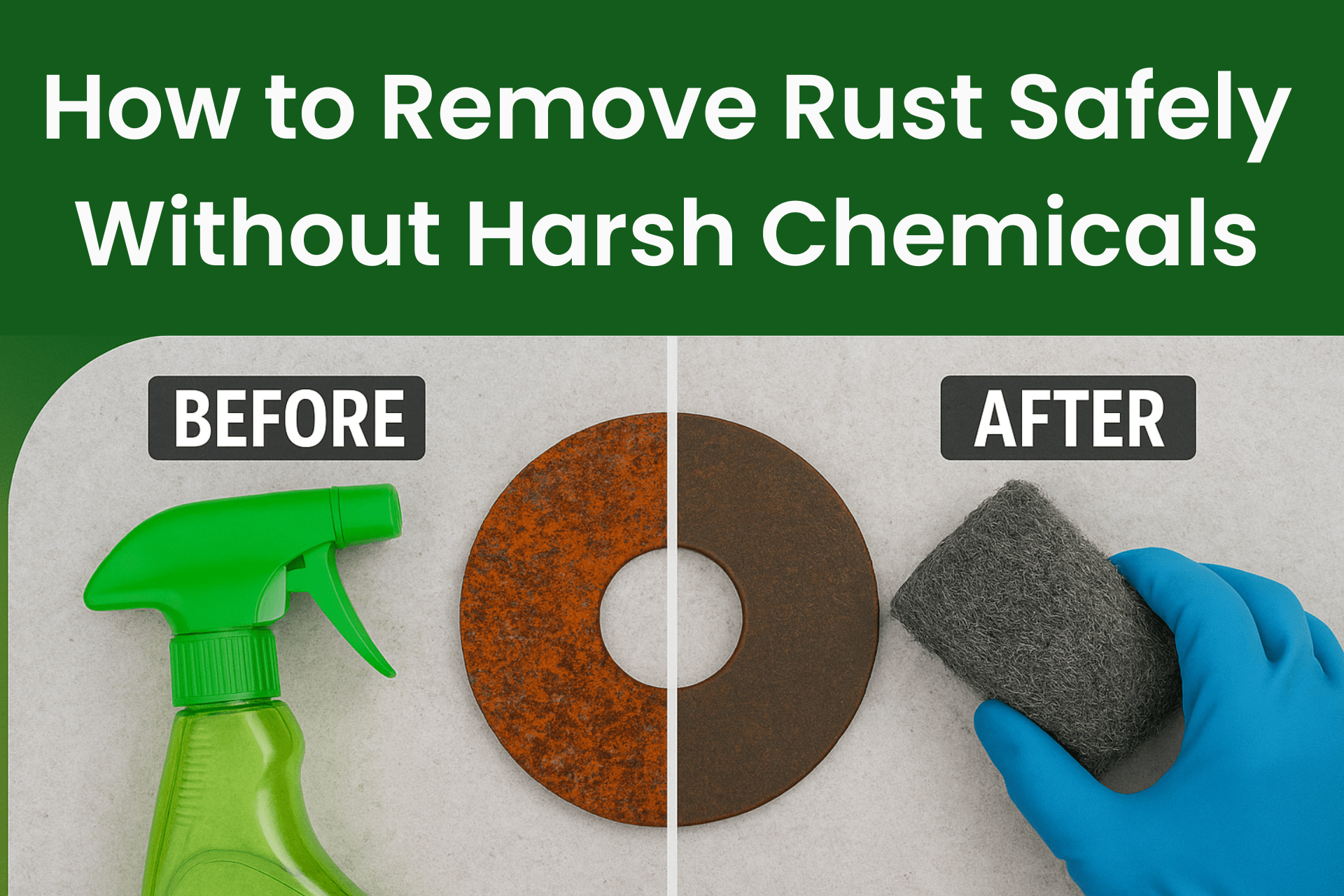
Rust can be a persistent problem, appearing on everything from garden tools and patio furniture to bicycles and car parts. While reaching for a potent chemical cleaner might seem like the quickest fix, these products often contain harsh acids and solvents that can be harmful to you and the environment. Fortunately, a shift toward safer, more sustainable options is making it easier than ever to tackle rust without compromising your health or the planet. The future of cleaning lies in eco-friendly chemistry solutions that are both effective and gentle.
This guide will show you how to remove rust safely using methods that are kinder to the earth. We will explore simple DIY remedies using household ingredients and introduce you to the innovations in eco-friendly chemical technology. You will learn how to restore your metal items to their former glory while making a responsible choice for your home and the environment.
Why Choose an eco-friendly Rust Remover?
Traditional rust removers often rely on strong acids like phosphoric or hydrochloric acid. While effective, these chemicals can release toxic fumes, cause skin burns, and contaminate soil and water if not disposed of properly. Choosing an eco-friendly Rust Remover minimizes these risks.
These greener alternatives are typically biodegradable, non-toxic, and fume-free, making them safer for use around children and pets. By opting for these products, you support the growing green chemical industry, which is dedicated to developing effective cleaners that do not harm our planet. This industry focuses on eco-friendly chemical processes that prioritize sustainability from production to disposal.
DIY eco-friendly Rust Removal Methods
Before you shop for a specialized product, you might already have highly effective rust removers in your kitchen pantry. These simple, non-toxic solutions are perfect for light to moderate rust on smaller items.
1. The Classic Vinegar Soak
White vinegar is a household staple with impressive rust-fighting power. Its acetic acid is strong enough to dissolve rust without being overly corrosive.
How to use it:
- Submerge: Place the rusty item in a container and pour enough white vinegar to cover it completely.
- Soak: Let the item soak for a few hours. For heavy rust, an overnight soak of up to 24 hours might be necessary.
- Scrub: After soaking, remove the item and scrub the loosened rust away with a stiff brush, steel wool, or a crumpled ball of aluminium foil.
- Rinse and Dry: Rinse the item thoroughly with water and dry it completely to prevent new rust from forming. Applying a light coat of oil can offer extra protection.
2. Baking Soda Paste
Baking soda is a mild abrasive that can gently lift surface rust. It works best on thin layers of rust and on items that cannot be soaked, like oven grates.
How to use it:
- Create a Paste: Mix baking soda with a small amount of water until you have a thick paste, similar in consistency to toothpaste.
- Apply: Spread the paste over the rusted area, ensuring it’s fully covered. Let it sit for an hour or two.
- Scrub: Use a toothbrush or scouring pad to scrub the rust off. The paste will act as a gentle scouring agent.
- Rinse and Dry: Rinse well and dry the item completely.
3. Lemon and Salt Combination
The combination of salt and lemon juice creates a powerful, natural rust remover. The salt acts as an abrasive, while the citric acid in the lemon juice dissolves the rust.
How to use it:
- Coat the Area: Sprinkle a generous layer of coarse salt over the rusted surface.
- Add Lemon Juice: Squeeze fresh lemon juice over the salt. Let the mixture sit for several hours to work its magic.
- Scrub: Use the lemon rind to scrub the mixture into the rust. The rind is tough enough to help lift the rust without scratching most metals.
- Rinse and Dry: Finish by rinsing the object with water and drying it thoroughly.
The Rise of eco-friendly chemical technology
While DIY methods are great for many situations, they may not be sufficient for heavy-duty rust or large-scale projects. This is where the advancements in the green chemical industry truly shine. Companies are now using innovative, eco-friendly chemical technology to create powerful rust removers that are safe and sustainable.
These modern products are often pH-neutral, water-based, and biodegradable. Instead of using harsh acids to burn away rust, they use a process called chelation. In this eco-friendly chemical process, the active ingredient bonds to the iron in the rust, pulling it away from the metal surface without damaging the underlying material.
When shopping for a commercial product, look for an eco-friendly Rust Remover with these features:
- Water-based and biodegradable formula.
- Non-toxic, non-corrosive, and fume-free.
- Safe for use on various metals, paints, and plastics.
- Reusable, as many chelation-based solutions can be used multiple times.
These products represent the best of modern eco-friendly chemistry solutions, offering professional-grade results without the environmental and health drawbacks of older chemical formulas.
Preventing Rust from Returning
Removing rust is only half the battle. To keep your metal items in good condition, it is important to prevent rust from forming in the first place.
- Keep Items Dry: Moisture is the primary cause of rust. Always dry your tools, patio furniture, and other metal items thoroughly after they get wet.
- Apply a Protective Coating: A layer of paint, wax, or oil can create a barrier between the metal and the air, preventing oxidation. For tools, a quick wipe with mineral oil after each use can make a big difference.
- Store Properly: Store metal items in a dry, low-humidity environment. Using a dehumidifier in storage areas like basements or garages can be very effective.
A Cleaner, Greener Approach to Rust
Dealing with rust no longer requires a choice between effectiveness and safety. Whether you use a simple vinegar soak or a scientifically advanced eco-friendly cleaner, you can achieve excellent results without relying on harsh chemicals.
By embracing these methods, you are not just cleaning your belongings; you are contributing to a healthier home and supporting the green chemical industry’s mission to create a more sustainable future. The next time you spot rust, remember that the most powerful solutions are often the ones that work in harmony with our planet.
About Sanirite
If you’re exploring safer ways to clean rust without relying on harsh chemical treatments, Sanirite is a brand that perfectly aligns with that approach. Sanirite focuses on Advanced Green Chemistry, creating cleaning products that deliver strong performance while staying gentle on people, surfaces, and the environment.
If you’re looking for cleaning solutions that genuinely work while being kinder to your home and the planet, Sanirite offers a range of products that blend performance with responsibility—making everyday cleaning simpler, safer, and more sustainable.
Frequently Asked Questions (FAQ)
Are eco-friendly rust removers as effective as chemical ones?
Yes. Modern eco-friendly rust removers use chelation technology, which pulls rust away from metal surfaces without damaging them. These solutions are powerful, water-based, biodegradable, and safe to use around children and pets.
Can I remove rust using household items?
Absolutely. Everyday ingredients like white vinegar, baking soda, lemon juice, and salt can remove light to moderate rust effectively. These methods are non-toxic and environmentally friendly.
What is the safest way to remove rust at home without using harsh chemicals?
The safest method is to use natural ingredients like vinegar, baking soda, or lemon with salt. These household items gently dissolve rust without releasing harmful fumes or risking skin irritation. They are ideal for small metal objects and light to moderate rust buildup.
Are homemade rust removal remedies safe for all types of metals?
Most natural methods are safe for common metals like steel, iron, and chrome. However, delicate or decorative metals may require testing on a small area first. DIY solutions are generally mild and far less corrosive than chemical alternatives.
How long does it take to remove rust using natural ingredients?
A natural soak like vinegar may take a few hours, while heavy rust might require an overnight treatment. Baking soda paste and lemon-salt mixtures usually work within one to two hours, depending on the rust’s thickness.
How can I prevent rust from appearing again after cleaning?
Keeping surfaces dry, applying a thin protective layer of oil or wax, and storing metal items in low-humidity environments are the most effective ways to prevent rust from returning. Proper maintenance significantly extends the life of metal tools and objects.
Is Sanirite a good option for rust removal and eco-friendly cleaning?
Sanirite focuses on advanced green chemistry and creates products that are safe, biodegradable, and highly effective. Their eco-friendly cleaning solutions are designed to deliver deep cleaning power without harsh chemicals, making them suitable for homes, institutions, and industries.